Transaction value cannot be rejected solely on non-statutory valuation guidelines without corroborative evidence supporting reassessment of final cust...
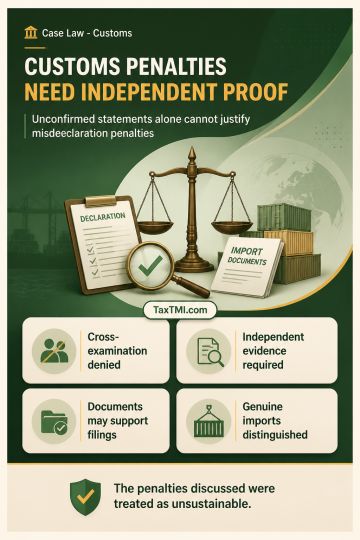
Cross-examination rights and corroborated evidence limit customs penalties for misdeclaration in genuine import transactions involving documented clea...
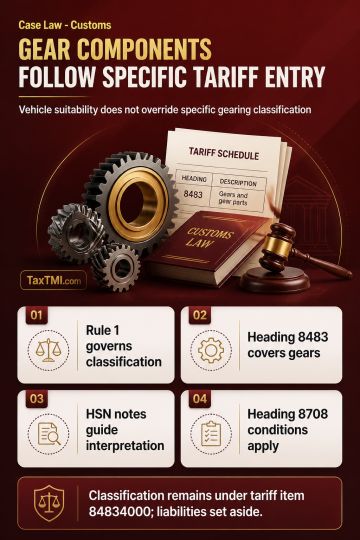
Tariff classification of vehicle gear components follows the specific gearing entry, displacing motor-vehicle parts classification and related liabili...
Necessary-party requirements limit impleadment of independent entities, while deferred consideration does not create an appealable adverse determinati...
Food supplement classification requires common parlance and authoritative tests, preventing treatment as proprietary Ayurvedic medicines without suppo...
The CBIC issued comprehensive instructions for processing GST registration applications, establishing clear guidelines for tax officers to streamline and standardize the verification process. Key directives include: (a) accepting one documentary proof for principal place of business ownership, (b) restricting additional document requests, (c) mandating registration approval within 7-30 days depending on risk assessment, and (d) prohibiting presumptive queries unrelated to submitted documents. Officers must carefully scrutinize applications, avoid unnecessary delays, and ensure genuine applicants are not harassed while preventing fraudulent registrations. The instructions aim to create a transparent, efficient GST registration mechanism with defined timelines and reduced administrative discretion.
The CBIC issued comprehensive instructions for processing GST registration applications, establishing clear guidelines for tax officers to streamline and standardize the verification process. Key directives include: (a) accepting one documentary proof for principal place of business ownership, (b) restricting additional document requests, (c) mandating registration approval within 7-30 days depending on risk assessment, and (d) prohibiting presumptive queries unrelated to submitted documents. Officers must carefully scrutinize applications, avoid unnecessary delays, and ensure genuine applicants are not harassed while preventing fraudulent registrations. The instructions aim to create a transparent, efficient GST registration mechanism with defined timelines and reduced administrative discretion.
Note: It is a system-generated summary and is for quick reference only.
 TaxTMI
 of 4805





















 Join Channel


 TaxTMI
