Authentication of paper assessment orders upheld, while qualifying repairs, consumables and vendor advance write-offs remain deductible business claim...
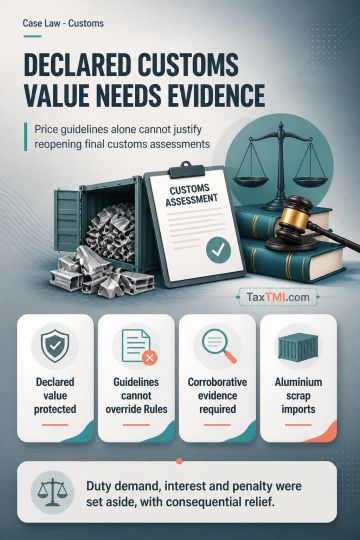
Transaction value cannot be rejected solely on non-statutory valuation guidelines without corroborative evidence supporting reassessment of final cust...
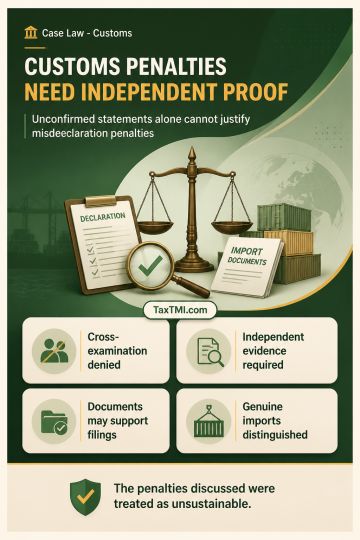
Cross-examination rights and corroborated evidence limit customs penalties for misdeclaration in genuine import transactions involving documented clea...
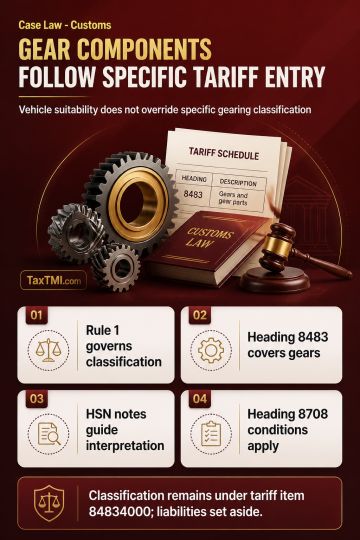
Tariff classification of vehicle gear components follows the specific gearing entry, displacing motor-vehicle parts classification and related liabili...
Page of 4798
Press 'Enter' after typing page number.
621 to 640 of 95955 Results
❮
❯
❯❯
0 / 200
Expand Note
Add to Folder
No Folders have been created
+
Are you sure you want to delete "My most important" ?
ITAT adjudicated two key issues involving tax treatment of commercial transactions. First, regarding interest disallowance under section 36(1)(iii), the Tribunal held that loans advanced to third parties constituted genuine commercial transactions. Despite non-recovery of interest, the Tribunal found no evidence of fund diversion, ruling in favor of the assessee. Second, concerning melting charges, the Tribunal set aside the addition based on estimated melting gain, directing the Assessing Officer to delete the addition, respecting the assessee's maintained accounting records and following precedent from a prior assessment year. Both substantive issues were resolved in the assessee's favor, emphasizing commercial reasonableness and proper accounting practices.
ITAT adjudicated two key issues involving tax treatment of commercial transactions. First, regarding interest disallowance under section 36(1)(iii), the Tribunal held that loans advanced to third parties constituted genuine commercial transactions. Despite non-recovery of interest, the Tribunal found no evidence of fund diversion, ruling in favor of the assessee. Second, concerning melting charges, the Tribunal set aside the addition based on estimated melting gain, directing the Assessing Officer to delete the addition, respecting the assessee's maintained accounting records and following precedent from a prior assessment year. Both substantive issues were resolved in the assessee's favor, emphasizing commercial reasonableness and proper accounting practices.
Note: It is a system-generated summary and is for quick reference only.
 TaxTMI
 of 4798
















 Join Channel


 TaxTMI