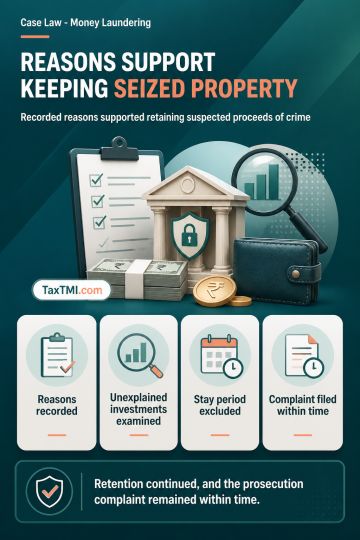
Retention of seized property survives where recorded reasons support proceeds of crime, while stayed investigation periods are excluded from limitatio...
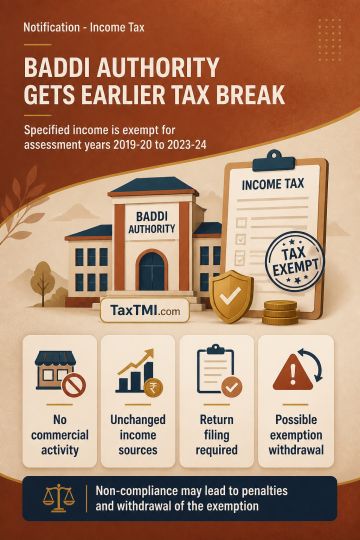
Specified income of Baddi Barotiwala Nalagarh Development Authority receives conditional tax exemption, retrospectively covering its designated assess...
Specified development authority income receives retrospective tax exemption, subject to non-commercial activity, unchanged income sources, and return-...
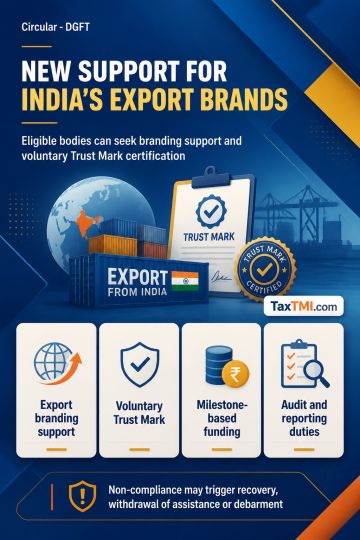
Unified Brand India framework introduces voluntary Trust Mark certification and funding support for export branding, packaging and global promotional ...
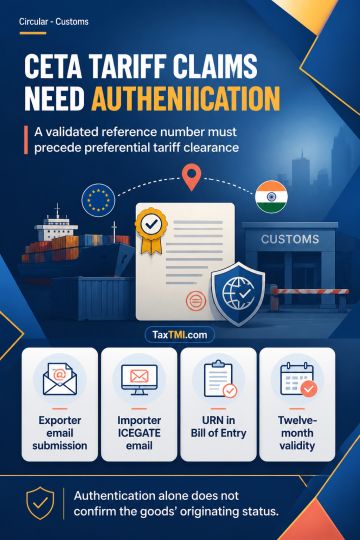
Origin Declaration authentication governs preferential tariff claims under India-UK CETA, requiring a validated reference number before import clearan...
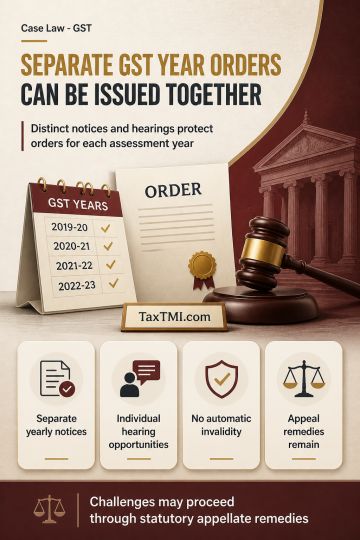
Separate assessment orders for different years remain valid when distinct notices and hearing opportunities prevent prejudice from combined proceeding...
ITAT adjudicated a dispute regarding Fees for Technical Services (FTS) in cross-border logistics services. The tribunal comprehensively analyzed the nature of services, emphasizing that FTS requires specialized knowledge transfer beyond mere service provision. The court distinguished between standard regulatory compliance and genuine technical expertise. Crucially, the tribunal determined that generic operational instructions, customs clearance procedures, and workforce standardization do not constitute FTS. The software development aspect was referenced with precedential principles from Supreme Court jurisprudence. Ultimately, the appellate tribunal allowed the assessee's appeal, rejecting the revenue department's contention of taxable FTS, thereby narrowing the interpretation of technical services under domestic tax regulations and bilateral tax treaty frameworks.
ITAT adjudicated a dispute regarding Fees for Technical Services (FTS) in cross-border logistics services. The tribunal comprehensively analyzed the nature of services, emphasizing that FTS requires specialized knowledge transfer beyond mere service provision. The court distinguished between standard regulatory compliance and genuine technical expertise. Crucially, the tribunal determined that generic operational instructions, customs clearance procedures, and workforce standardization do not constitute FTS. The software development aspect was referenced with precedential principles from Supreme Court jurisprudence. Ultimately, the appellate tribunal allowed the assessee's appeal, rejecting the revenue department's contention of taxable FTS, thereby narrowing the interpretation of technical services under domestic tax regulations and bilateral tax treaty frameworks.
Note: It is a system-generated summary and is for quick reference only.
 TaxTMI
 of 4801






 Join Channel


 TaxTMI