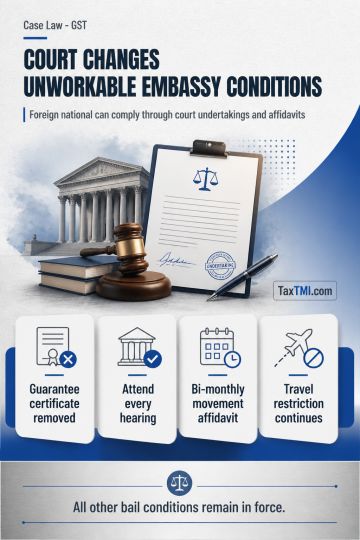
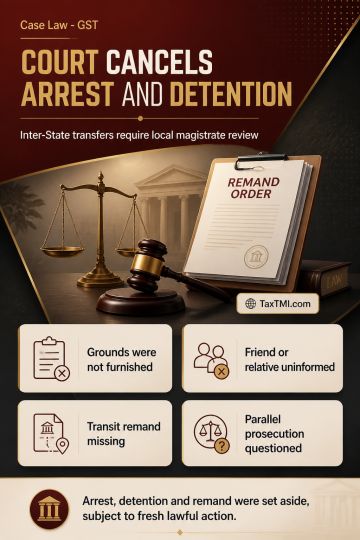
Arrest safeguards and transit remand requirements invalidated detention following inter-State transfer without communicated grounds or magistrate auth...
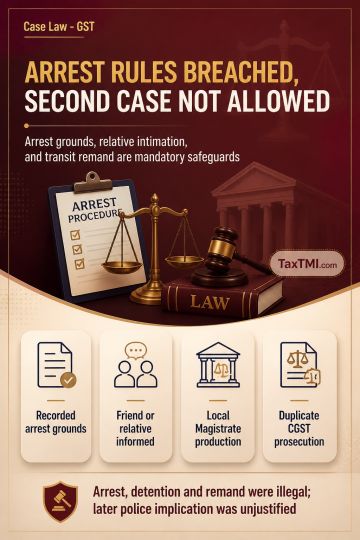
Arrest safeguards require disclosed grounds, relative intimation and transit remand, while duplicate prosecution under the CGST framework is unsustain...
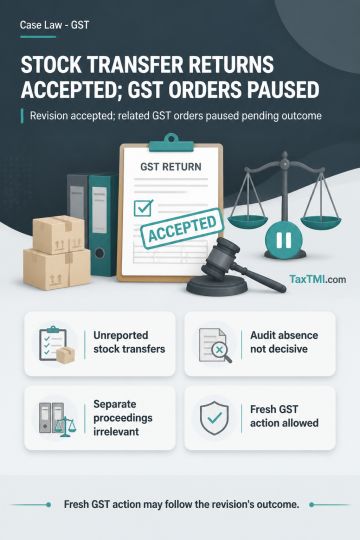
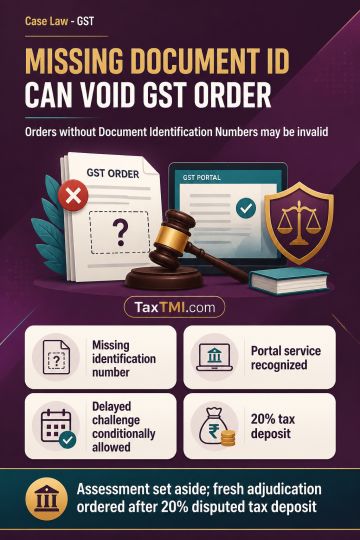
Document Identification Number defects can invalidate GST assessments, with delayed challenges entertained conditionally where patent irregularities e...
Windmill commissioning evidence supported higher depreciation where grid connection and electricity generation proved operational use before the relev...
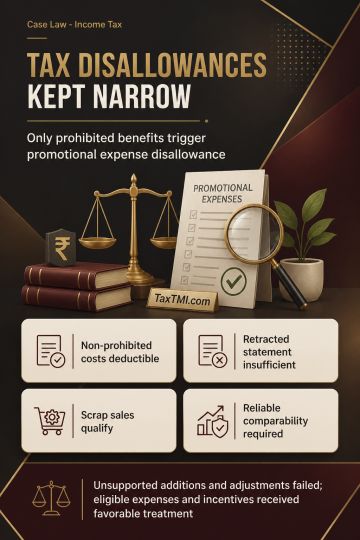
Pharmaceutical promotion and transfer-pricing comparability principles limited disallowances, while uncorroborated search allegations and unsupported ...
Page of 4796
Press 'Enter' after typing page number.
661 to 680 of 95918 Results
❮
❯
❯❯
0 / 200
Expand Note
Add to Folder
No Folders have been created
+
Are you sure you want to delete "My most important" ?
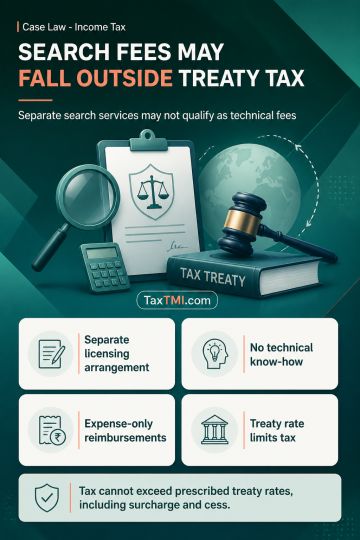
ITAT adjudicated a dispute regarding Fees for Technical Services (FTS) in cross-border logistics services. The tribunal comprehensively analyzed the nature of services, emphasizing that FTS requires specialized knowledge transfer beyond mere service provision. The court distinguished between standard regulatory compliance and genuine technical expertise. Crucially, the tribunal determined that generic operational instructions, customs clearance procedures, and workforce standardization do not constitute FTS. The software development aspect was referenced with precedential principles from Supreme Court jurisprudence. Ultimately, the appellate tribunal allowed the assessee's appeal, rejecting the revenue department's contention of taxable FTS, thereby narrowing the interpretation of technical services under domestic tax regulations and bilateral tax treaty frameworks.
ITAT adjudicated a dispute regarding Fees for Technical Services (FTS) in cross-border logistics services. The tribunal comprehensively analyzed the nature of services, emphasizing that FTS requires specialized knowledge transfer beyond mere service provision. The court distinguished between standard regulatory compliance and genuine technical expertise. Crucially, the tribunal determined that generic operational instructions, customs clearance procedures, and workforce standardization do not constitute FTS. The software development aspect was referenced with precedential principles from Supreme Court jurisprudence. Ultimately, the appellate tribunal allowed the assessee's appeal, rejecting the revenue department's contention of taxable FTS, thereby narrowing the interpretation of technical services under domestic tax regulations and bilateral tax treaty frameworks.
Note: It is a system-generated summary and is for quick reference only.
 TaxTMI
 of 4796








 Join Channel


 TaxTMI