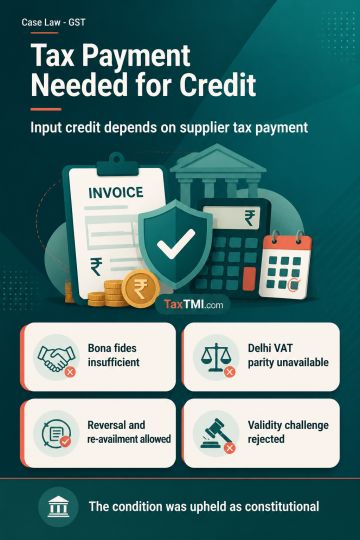
Input tax credit conditions remain constitutionally valid, with eligible recipient claims considered under GST circulars and retrospective filing dead...
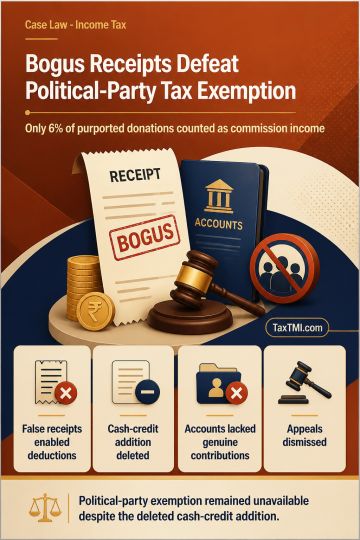
Bogus donation receipts justified commission income assessment and defeated political-party tax exemption for inaccurate accounts and reporting failur...
Pure reimbursement without income element escapes tax withholding, while delayed withholding and unsupported provisions face deferred or renewed scrut...
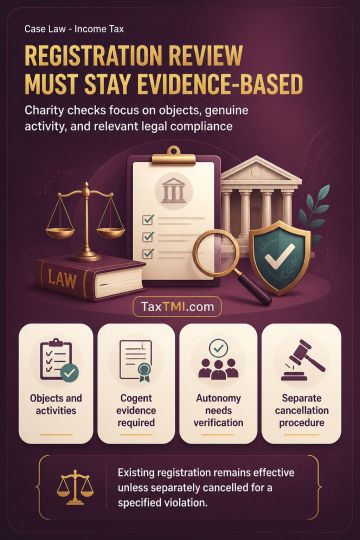
Public benefit requirement defeats charitable registration where residents' association services are reciprocal, member-only facilities governed by mu...
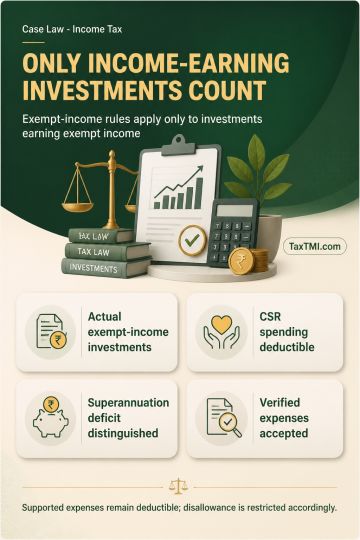
Exempt-income expenditure disallowance is confined to investments that actually generated exempt income, while supported business expenses remain dedu...
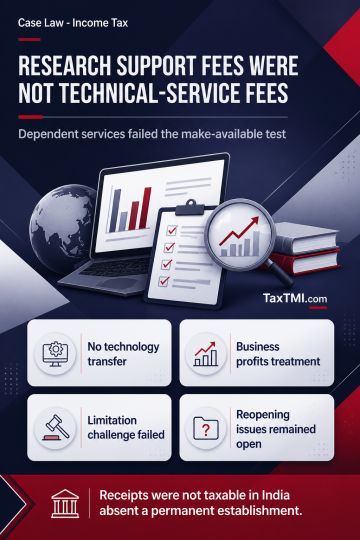
ITAT adjudicated a dispute regarding Fees for Technical Services (FTS) in cross-border logistics services. The tribunal comprehensively analyzed the nature of services, emphasizing that FTS requires specialized knowledge transfer beyond mere service provision. The court distinguished between standard regulatory compliance and genuine technical expertise. Crucially, the tribunal determined that generic operational instructions, customs clearance procedures, and workforce standardization do not constitute FTS. The software development aspect was referenced with precedential principles from Supreme Court jurisprudence. Ultimately, the appellate tribunal allowed the assessee's appeal, rejecting the revenue department's contention of taxable FTS, thereby narrowing the interpretation of technical services under domestic tax regulations and bilateral tax treaty frameworks.
ITAT adjudicated a dispute regarding Fees for Technical Services (FTS) in cross-border logistics services. The tribunal comprehensively analyzed the nature of services, emphasizing that FTS requires specialized knowledge transfer beyond mere service provision. The court distinguished between standard regulatory compliance and genuine technical expertise. Crucially, the tribunal determined that generic operational instructions, customs clearance procedures, and workforce standardization do not constitute FTS. The software development aspect was referenced with precedential principles from Supreme Court jurisprudence. Ultimately, the appellate tribunal allowed the assessee's appeal, rejecting the revenue department's contention of taxable FTS, thereby narrowing the interpretation of technical services under domestic tax regulations and bilateral tax treaty frameworks.
Note: It is a system-generated summary and is for quick reference only.
 TaxTMI
 of 4796







 Join Channel


 TaxTMI