Transaction value rejection requires reliable corroboration; refundable VAT is excluded and temporary registration does not defeat new-vehicle exempti...
Appellate jurisdiction remains available where a wrist-worn gold ornament cannot conclusively be characterised as imported baggage at the preliminary ...
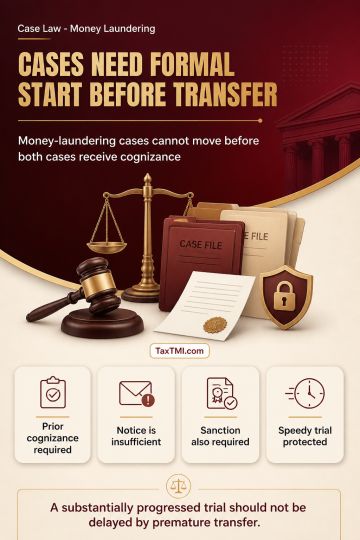
Written complaint requirement bars cognizance on police reports for securities offences, while unsupported breach of trust and cheating allegations fa...
Risk-based postal import clearance standardises electronic assessment, document requests, duty realisation and delivery controls at Foreign Post Offic...
Page of 4786
Press 'Enter' after typing page number.
61 to 80 of 95715 Results
❮
❯
❯❯
0 / 200
Expand Note
Add to Folder
No Folders have been created
+
Are you sure you want to delete "My most important" ?
The ITAT rejected the assessee's books of accounts as unreliable and estimated business profits at 2.21% instead of the 0.47% originally returned. The Tribunal upheld the CIT(A)'s decision based on identical circumstances found in a sister concern's case. The Tribunal rejected the Revenue's argument for a higher profit rate and found the proposed comparable entity to be in a different business line. The Tribunal clarified that the estimated income should subsume previous disallowances to prevent double taxation, ensuring the total income computation matches the 2.21% of turnover estimation. Consequently, the Tribunal upheld the CIT(A)'s order, rejecting separate additions for unaccounted sales and unexplained expenditure as these were already incorporated in the profit estimation.
The ITAT rejected the assessee's books of accounts as unreliable and estimated business profits at 2.21% instead of the 0.47% originally returned. The Tribunal upheld the CIT(A)'s decision based on identical circumstances found in a sister concern's case. The Tribunal rejected the Revenue's argument for a higher profit rate and found the proposed comparable entity to be in a different business line. The Tribunal clarified that the estimated income should subsume previous disallowances to prevent double taxation, ensuring the total income computation matches the 2.21% of turnover estimation. Consequently, the Tribunal upheld the CIT(A)'s order, rejecting separate additions for unaccounted sales and unexplained expenditure as these were already incorporated in the profit estimation.
Note: It is a system-generated summary and is for quick reference only.
 TaxTMI
 of 4786














 Join Channel


 TaxTMI