Necessary-party requirements limit impleadment of independent entities, while deferred consideration does not create an appealable adverse determinati...
Food supplement classification requires common parlance and authoritative tests, preventing treatment as proprietary Ayurvedic medicines without suppo...
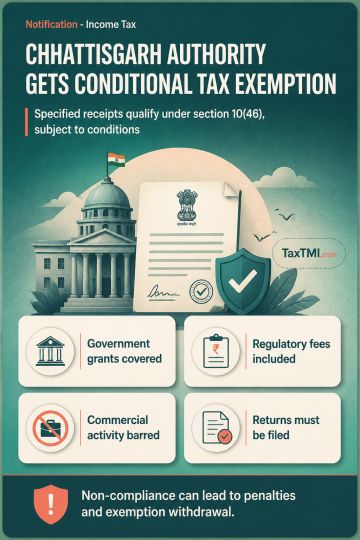
Specified regulatory authority income receives conditional tax exemption, subject to non-commercial activity, unchanged income character, and return f...
Tax exemption for regulatory authority income applies retrospectively, subject to non-commercial activity, unchanged income sources, and return-filing...
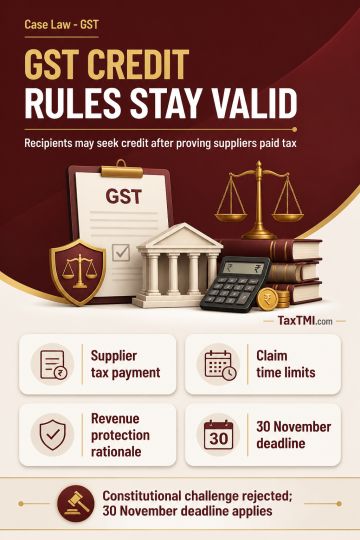
Input tax credit conditions remain constitutionally valid, with eligible recipient claims considered under GST circulars and retrospective filing dead...
The ITAT rejected the assessee's books of accounts as unreliable and estimated business profits at 2.21% instead of the 0.47% originally returned. The Tribunal upheld the CIT(A)'s decision based on identical circumstances found in a sister concern's case. The Tribunal rejected the Revenue's argument for a higher profit rate and found the proposed comparable entity to be in a different business line. The Tribunal clarified that the estimated income should subsume previous disallowances to prevent double taxation, ensuring the total income computation matches the 2.21% of turnover estimation. Consequently, the Tribunal upheld the CIT(A)'s order, rejecting separate additions for unaccounted sales and unexplained expenditure as these were already incorporated in the profit estimation.
The ITAT rejected the assessee's books of accounts as unreliable and estimated business profits at 2.21% instead of the 0.47% originally returned. The Tribunal upheld the CIT(A)'s decision based on identical circumstances found in a sister concern's case. The Tribunal rejected the Revenue's argument for a higher profit rate and found the proposed comparable entity to be in a different business line. The Tribunal clarified that the estimated income should subsume previous disallowances to prevent double taxation, ensuring the total income computation matches the 2.21% of turnover estimation. Consequently, the Tribunal upheld the CIT(A)'s order, rejecting separate additions for unaccounted sales and unexplained expenditure as these were already incorporated in the profit estimation.
Note: It is a system-generated summary and is for quick reference only.
 TaxTMI
 of 4792

















 Join Channel


 TaxTMI