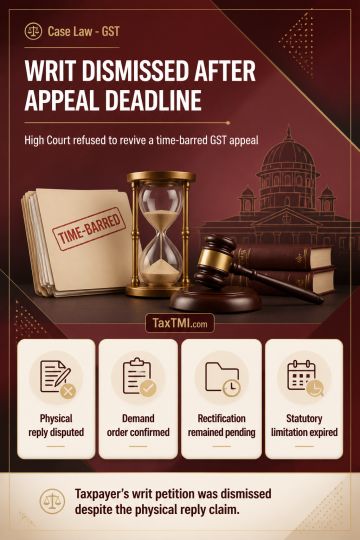
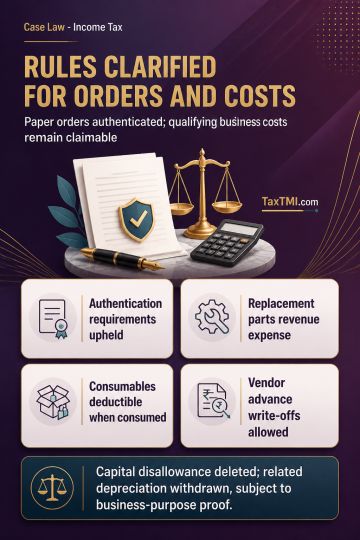
Authentication of paper assessment orders upheld, while qualifying repairs, consumables and vendor advance write-offs remain deductible business claim...
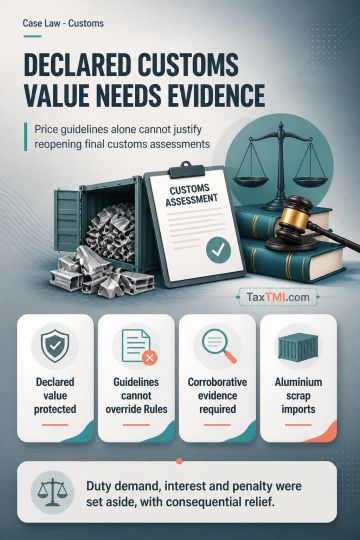
Transaction value cannot be rejected solely on non-statutory valuation guidelines without corroborative evidence supporting reassessment of final cust...
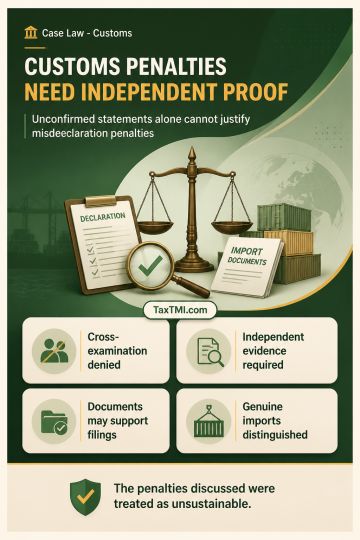
Cross-examination rights and corroborated evidence limit customs penalties for misdeclaration in genuine import transactions involving documented clea...
Page of 4782
Press 'Enter' after typing page number.
301 to 320 of 95636 Results
❮
❯
❯❯
0 / 200
Expand Note
Add to Folder
No Folders have been created
+
Are you sure you want to delete "My most important" ?
The document establishes a comprehensive Standard Operating Procedure (SOP) for container scanning at Tuticorin Custom House, detailing protocols for import and export container selection, scanning processes, and handling of suspicious containers. The Drive Through Container Scanning System (DTCS) automatically selects containers for scanning based on risk parameters, with mandatory scanning requirements for selected containers. Containers marked "CLEAN" receive a blue "SCANNED OK" stamp, while "SUSPICIOUS" containers undergo 100% examination. Export containers receive priority, with AEO and perishable cargo receiving precedence. Terminal operators, shipping lines, and customs brokers are responsible for ensuring selected containers are scanned, with potential penal actions for non-compliance under the Customs Act, 1962 and Handling of Cargo in Customs Areas Regulations, 2009.
The document establishes a comprehensive Standard Operating Procedure (SOP) for container scanning at Tuticorin Custom House, detailing protocols for import and export container selection, scanning processes, and handling of suspicious containers. The Drive Through Container Scanning System (DTCS) automatically selects containers for scanning based on risk parameters, with mandatory scanning requirements for selected containers. Containers marked "CLEAN" receive a blue "SCANNED OK" stamp, while "SUSPICIOUS" containers undergo 100% examination. Export containers receive priority, with AEO and perishable cargo receiving precedence. Terminal operators, shipping lines, and customs brokers are responsible for ensuring selected containers are scanned, with potential penal actions for non-compliance under the Customs Act, 1962 and Handling of Cargo in Customs Areas Regulations, 2009.
Note: It is a system-generated summary and is for quick reference only.
 TaxTMI
 of 4782






 Join Channel


 TaxTMI