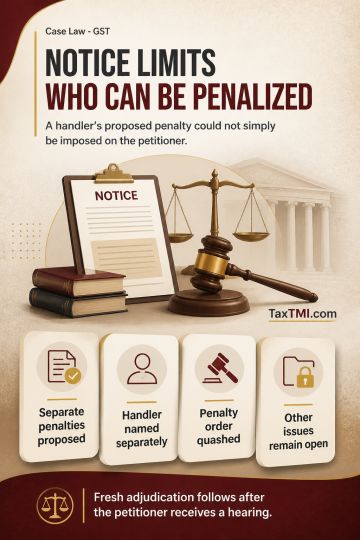
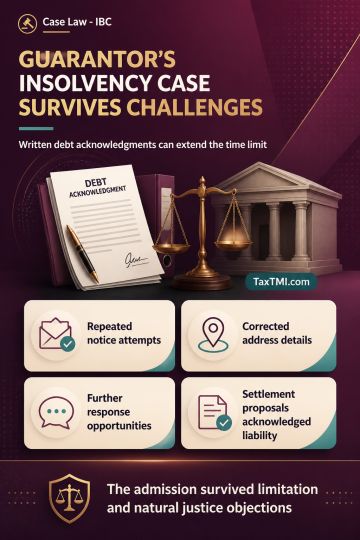
Service of notice and contractual debt acknowledgment preserved insolvency admission against a corporate guarantor despite limitation and natural just...
Original works exemption excludes standalone boulder transportation, leaving subcontracted railway-project transport services subject to service tax l...
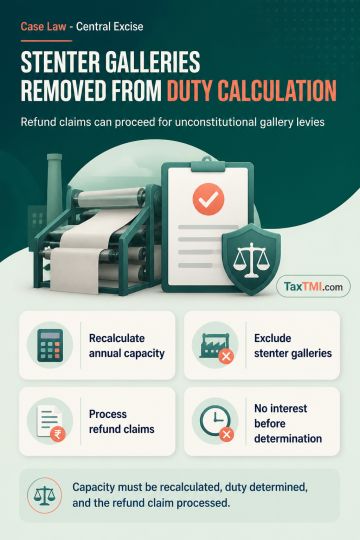
Annual production capacity determinations excluding stenter galleries support refunds for unconstitutional excise levies without an unjust-enrichment ...
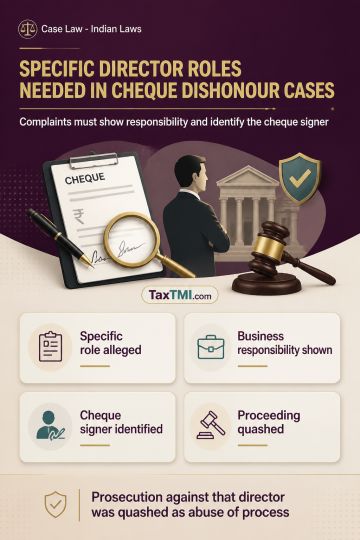
Vicarious liability for cheque dishonour requires specific allegations of responsibility and cheque signatory; generic director allegations cannot sus...
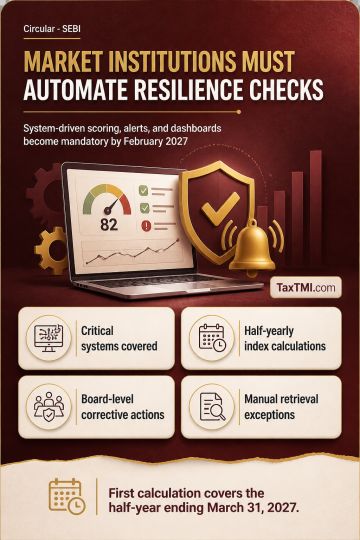
IT Resilience Index requires market infrastructure institutions to automate resilience scoring, early warnings, and continuous service-delivery monito...
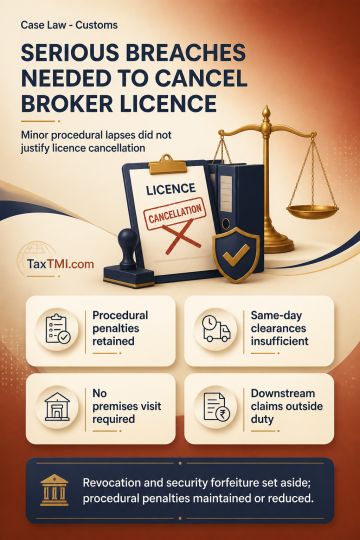
CESTAT analyzed a case involving a Customs House Agent (CHA) facing penalties under Sections 114(iii) and 114AA of the Customs Act, 1962. The tribunal found the department's allegations against the CHA unsubstantiated, noting no credible evidence of fraudulent intent or deliberate misconduct. The tribunal emphasized that penalties can only be imposed with positive proof of the CHA's direct involvement in fraudulent activities. The department failed to record the appellant's statement or provide substantive evidence of wrongdoing. Consequently, the tribunal allowed the appeal, holding the imposed penalties unsustainable and highlighting that procedural compliance alone does not constitute a punishable offense under customs regulations.
CESTAT analyzed a case involving a Customs House Agent (CHA) facing penalties under Sections 114(iii) and 114AA of the Customs Act, 1962. The tribunal found the department's allegations against the CHA unsubstantiated, noting no credible evidence of fraudulent intent or deliberate misconduct. The tribunal emphasized that penalties can only be imposed with positive proof of the CHA's direct involvement in fraudulent activities. The department failed to record the appellant's statement or provide substantive evidence of wrongdoing. Consequently, the tribunal allowed the appeal, holding the imposed penalties unsustainable and highlighting that procedural compliance alone does not constitute a punishable offense under customs regulations.
Note: It is a system-generated summary and is for quick reference only.
 TaxTMI
  TaxTMI
 of 4828





 Join Channel