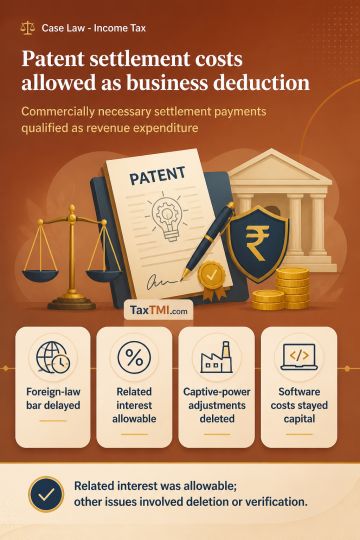
Patent-settlement expenditure treated as commercially expedient revenue outlay, with foreign-law restrictions inapplicable before the prospective amen...
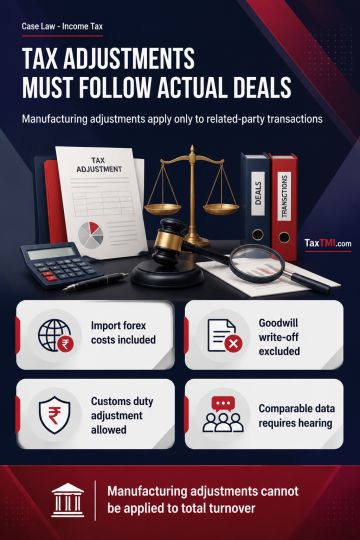
International transaction benchmarking restricts transfer pricing adjustments to associated-enterprise dealings, while functional comparability govern...
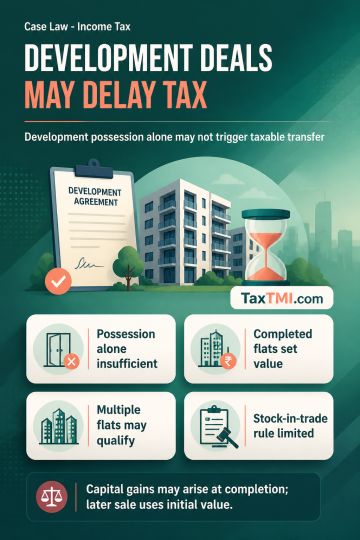
Joint development agreements defer taxable transfer where possession lacks part performance, while completed flats determine consideration and exempti...
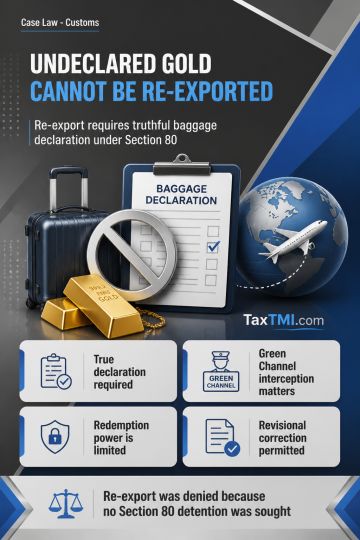
Passenger baggage re-export requires true declaration and cannot be granted indirectly through discretionary redemption of undeclared prohibited goods...
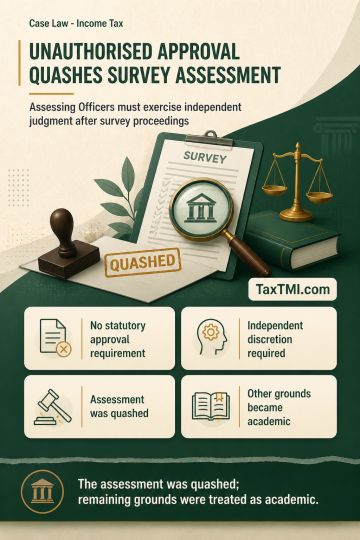
The ITAT examined the validity of an assessment order under sections 153A and 153D. The Tribunal found critical procedural irregularities in the approval process, specifically noting that the approval was granted on the same day as the draft and final assessment orders, without clear evidence of substantive examination. The approval was deemed invalid due to lack of proper application of mind, rendering the entire assessment order void ab initio. Regarding shares held as stock-in-trade, the Tribunal ruled that shares purchased in the regular course of business are not subject to taxation under section 56(2)(viia), emphasizing that the provision was intended to prevent tax evasion, not to tax legitimate business transactions. Consequently, the Assessee's appeal was allowed.
The ITAT examined the validity of an assessment order under sections 153A and 153D. The Tribunal found critical procedural irregularities in the approval process, specifically noting that the approval was granted on the same day as the draft and final assessment orders, without clear evidence of substantive examination. The approval was deemed invalid due to lack of proper application of mind, rendering the entire assessment order void ab initio. Regarding shares held as stock-in-trade, the Tribunal ruled that shares purchased in the regular course of business are not subject to taxation under section 56(2)(viia), emphasizing that the provision was intended to prevent tax evasion, not to tax legitimate business transactions. Consequently, the Assessee's appeal was allowed.
Note: It is a system-generated summary and is for quick reference only.
 TaxTMI
 of 4800




 Join Channel


 TaxTMI
