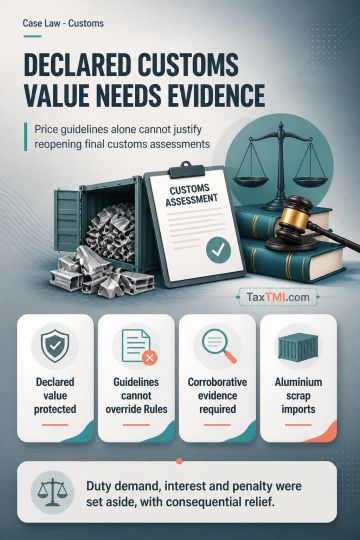
Transaction value cannot be rejected solely on non-statutory valuation guidelines without corroborative evidence supporting reassessment of final cust...
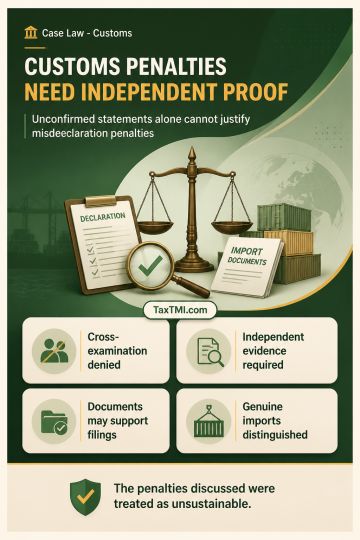
Cross-examination rights and corroborated evidence limit customs penalties for misdeclaration in genuine import transactions involving documented clea...
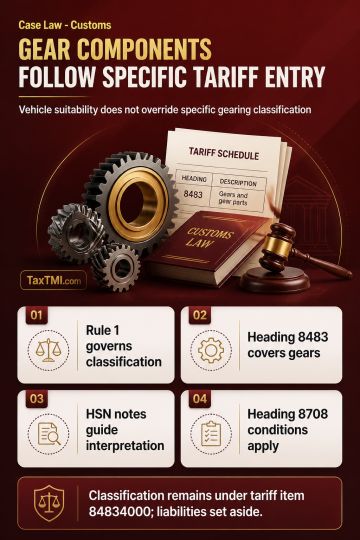
Tariff classification of vehicle gear components follows the specific gearing entry, displacing motor-vehicle parts classification and related liabili...
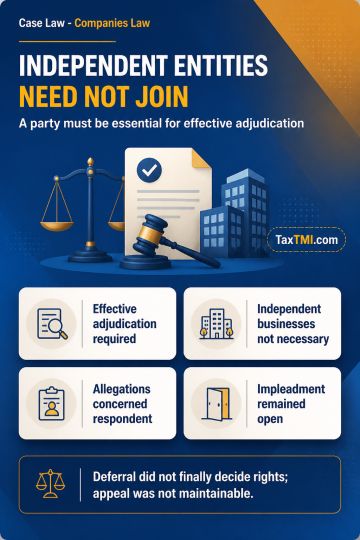
Necessary-party requirements limit impleadment of independent entities, while deferred consideration does not create an appealable adverse determinati...
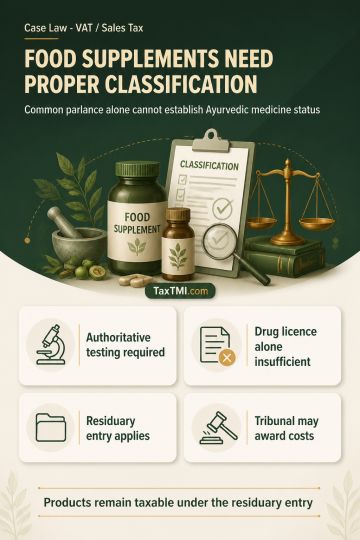
Food supplement classification requires common parlance and authoritative tests, preventing treatment as proprietary Ayurvedic medicines without suppo...
CESTAT adjudicated a case involving alleged submission of false export documents. The tribunal found insufficient evidence to substantiate charges of abetment or fraudulent activity against the appellant, who merely acted as an intermediary transmitting documents received from a shipping agency to a Customs House Agent. Without credible proof of deliberate misconduct or material misrepresentation, the tribunal ruled that imposing penalties under Sections 114(iii) and 114AA of the Customs Act, 1962 was unjustified. Relying on precedent from a similar case, the tribunal emphasized that penalties can only be imposed when positive involvement in fraudulent import/export is conclusively established. The appeal was consequently allowed, and the penalties were set aside.
CESTAT adjudicated a case involving alleged submission of false export documents. The tribunal found insufficient evidence to substantiate charges of abetment or fraudulent activity against the appellant, who merely acted as an intermediary transmitting documents received from a shipping agency to a Customs House Agent. Without credible proof of deliberate misconduct or material misrepresentation, the tribunal ruled that imposing penalties under Sections 114(iii) and 114AA of the Customs Act, 1962 was unjustified. Relying on precedent from a similar case, the tribunal emphasized that penalties can only be imposed when positive involvement in fraudulent import/export is conclusively established. The appeal was consequently allowed, and the penalties were set aside.
Note: It is a system-generated summary and is for quick reference only.
 TaxTMI
 of 4805






 Join Channel


 TaxTMI
