Service of notice and contractual debt acknowledgment preserved insolvency admission against a corporate guarantor despite limitation and natural just...
Original works exemption excludes standalone boulder transportation, leaving subcontracted railway-project transport services subject to service tax l...
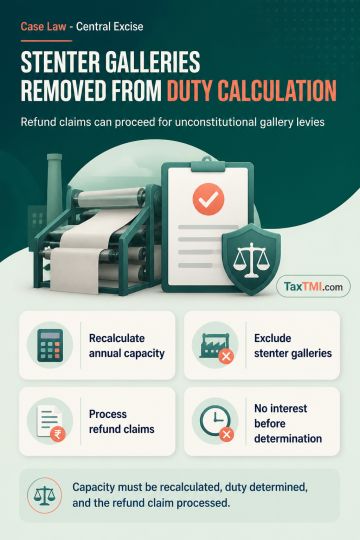
Annual production capacity determinations excluding stenter galleries support refunds for unconstitutional excise levies without an unjust-enrichment ...
Vicarious liability for cheque dishonour requires specific allegations of responsibility and cheque signatory; generic director allegations cannot sus...
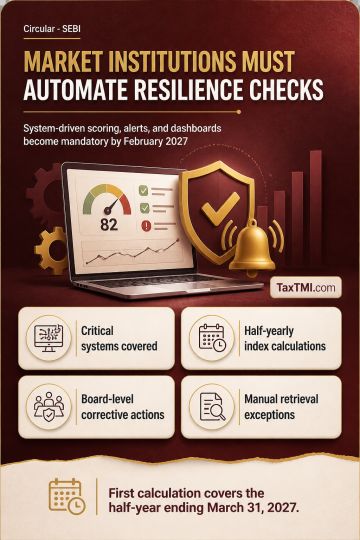
IT Resilience Index requires market infrastructure institutions to automate resilience scoring, early warnings, and continuous service-delivery monito...
ITAT ruled that the PCIT's revision order under Section 263 was unsustainable. The Tribunal found no incriminating material in the seized documents to support claims of undisclosed on-money payments during Assessment Years 2017-18 and 2018-19. Contradictory statements from witnesses and lack of documentary evidence undermined the revenue's position. The Assessing Officer had adopted a plausible view regarding on-money payments, which were determined to be made during Assessment Years 2020-21 and 2021-22. Consequently, the Tribunal held that adopting an alternative interpretation does not render the original assessment order erroneous or prejudicial to revenue interests. The assessee's appeal was allowed, effectively setting aside the revision order.
ITAT ruled that the PCIT's revision order under Section 263 was unsustainable. The Tribunal found no incriminating material in the seized documents to support claims of undisclosed on-money payments during Assessment Years 2017-18 and 2018-19. Contradictory statements from witnesses and lack of documentary evidence undermined the revenue's position. The Assessing Officer had adopted a plausible view regarding on-money payments, which were determined to be made during Assessment Years 2020-21 and 2021-22. Consequently, the Tribunal held that adopting an alternative interpretation does not render the original assessment order erroneous or prejudicial to revenue interests. The assessee's appeal was allowed, effectively setting aside the revision order.
Note: It is a system-generated summary and is for quick reference only.
 TaxTMI
  TaxTMI
 of 4828















 Join Channel