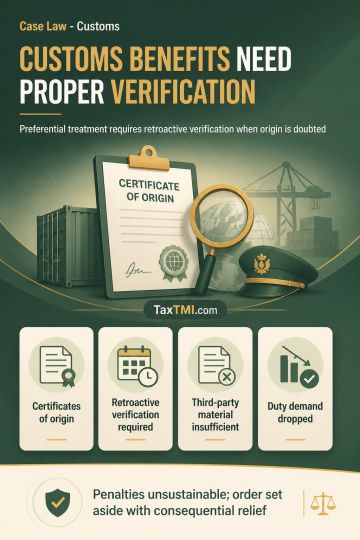
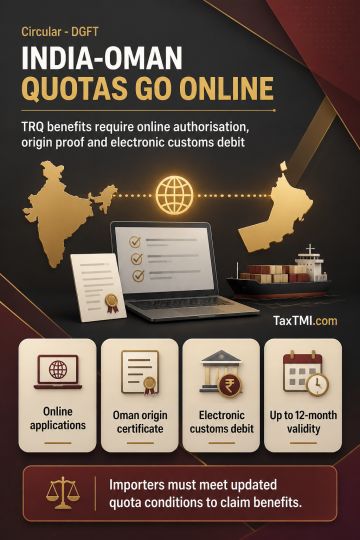
Certificate-of-origin verification procedure governs preferential customs benefits; denial without retroactive verification was set aside with consequ...
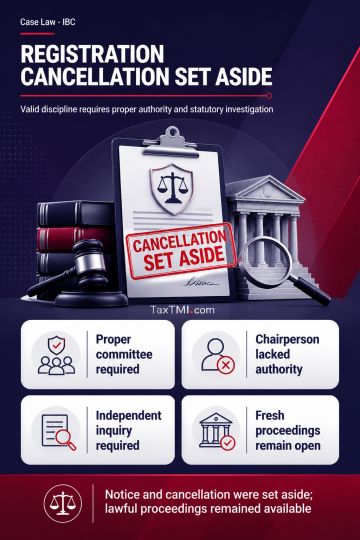
Disciplinary Committee jurisdiction and mandatory investigation requirements invalidated cancellation of an insolvency professional's registration and...
Retention of seized property survives where recorded reasons support proceeds of crime, while stayed investigation periods are excluded from limitatio...
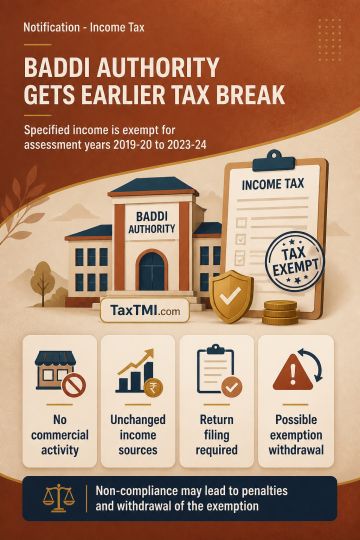
Specified income of Baddi Barotiwala Nalagarh Development Authority receives conditional tax exemption, retrospectively covering its designated assess...
Specified development authority income receives retrospective tax exemption, subject to non-commercial activity, unchanged income sources, and return-...
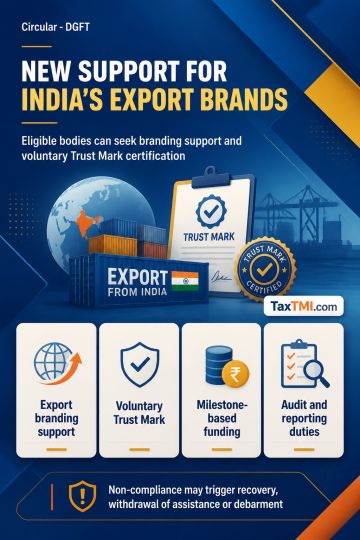
Unified Brand India framework introduces voluntary Trust Mark certification and funding support for export branding, packaging and global promotional ...
HC adjudicated a tax seizure case involving inter-unit transportation of goods. The court determined that no tax evasion occurred during the transfer of a compactor machine from Rajasthan to Uttar Pradesh. Despite initial interception due to missing documentation, the subsequent production of delivery challan and e-way bill demonstrated compliance. The court emphasized that stock transfers between organizational units without a sales transaction do not attract GST liability. Critically, the respondent authority failed to establish any deliberate intent to circumvent tax regulations. Relying on precedential reasoning, the HC ruled that procedural technicalities did not warrant punitive action. The petition was ultimately allowed, nullifying the seizure proceedings under Section 129 of the CGST Act.
HC adjudicated a tax seizure case involving inter-unit transportation of goods. The court determined that no tax evasion occurred during the transfer of a compactor machine from Rajasthan to Uttar Pradesh. Despite initial interception due to missing documentation, the subsequent production of delivery challan and e-way bill demonstrated compliance. The court emphasized that stock transfers between organizational units without a sales transaction do not attract GST liability. Critically, the respondent authority failed to establish any deliberate intent to circumvent tax regulations. Relying on precedential reasoning, the HC ruled that procedural technicalities did not warrant punitive action. The petition was ultimately allowed, nullifying the seizure proceedings under Section 129 of the CGST Act.
Note: It is a system-generated summary and is for quick reference only.
 TaxTMI
 of 4803















 Join Channel


 TaxTMI