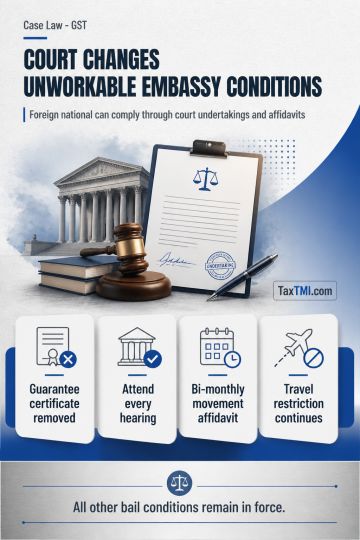
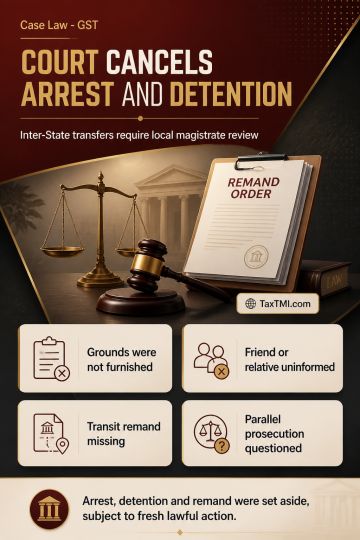
Arrest safeguards and transit remand requirements invalidated detention following inter-State transfer without communicated grounds or magistrate auth...
Arrest safeguards require disclosed grounds, relative intimation and transit remand, while duplicate prosecution under the CGST framework is unsustain...
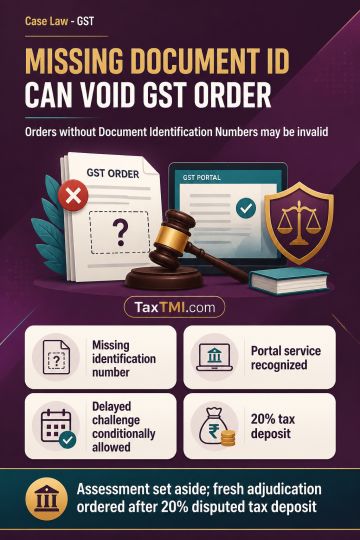
Document Identification Number defects can invalidate GST assessments, with delayed challenges entertained conditionally where patent irregularities e...
Windmill commissioning evidence supported higher depreciation where grid connection and electricity generation proved operational use before the relev...
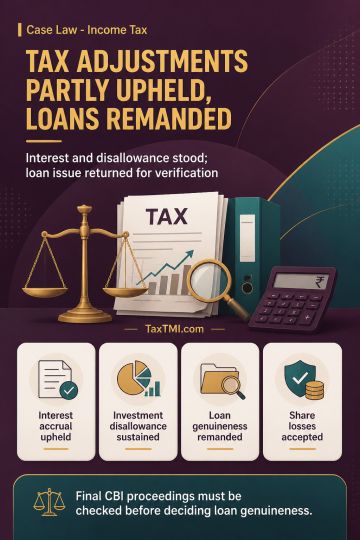
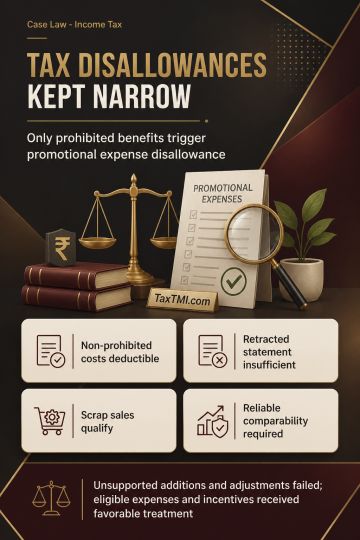
Pharmaceutical promotion and transfer-pricing comparability principles limited disallowances, while uncorroborated search allegations and unsupported ...
HC adjudicated a tax seizure case involving inter-unit transportation of goods. The court determined that no tax evasion occurred during the transfer of a compactor machine from Rajasthan to Uttar Pradesh. Despite initial interception due to missing documentation, the subsequent production of delivery challan and e-way bill demonstrated compliance. The court emphasized that stock transfers between organizational units without a sales transaction do not attract GST liability. Critically, the respondent authority failed to establish any deliberate intent to circumvent tax regulations. Relying on precedential reasoning, the HC ruled that procedural technicalities did not warrant punitive action. The petition was ultimately allowed, nullifying the seizure proceedings under Section 129 of the CGST Act.
HC adjudicated a tax seizure case involving inter-unit transportation of goods. The court determined that no tax evasion occurred during the transfer of a compactor machine from Rajasthan to Uttar Pradesh. Despite initial interception due to missing documentation, the subsequent production of delivery challan and e-way bill demonstrated compliance. The court emphasized that stock transfers between organizational units without a sales transaction do not attract GST liability. Critically, the respondent authority failed to establish any deliberate intent to circumvent tax regulations. Relying on precedential reasoning, the HC ruled that procedural technicalities did not warrant punitive action. The petition was ultimately allowed, nullifying the seizure proceedings under Section 129 of the CGST Act.
Note: It is a system-generated summary and is for quick reference only.
 TaxTMI
 of 4798












 Join Channel


 TaxTMI