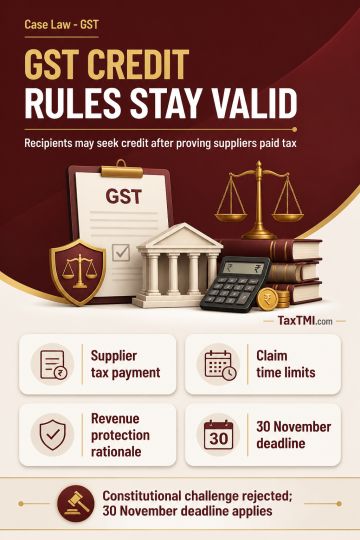
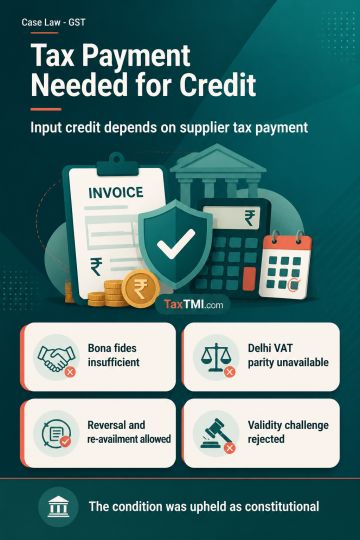
Input tax credit conditions remain constitutionally valid, with eligible recipient claims considered under GST circulars and retrospective filing dead...
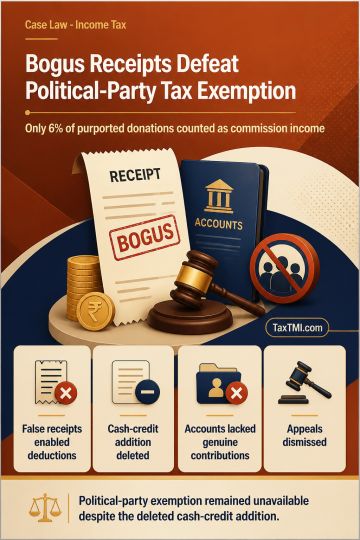
Bogus donation receipts justified commission income assessment and defeated political-party tax exemption for inaccurate accounts and reporting failur...
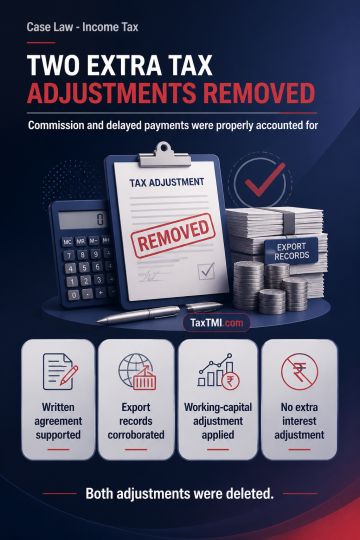
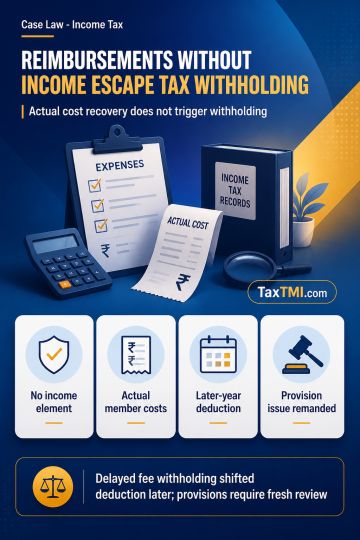
Pure reimbursement without income element escapes tax withholding, while delayed withholding and unsupported provisions face deferred or renewed scrut...
Public benefit requirement defeats charitable registration where residents' association services are reciprocal, member-only facilities governed by mu...
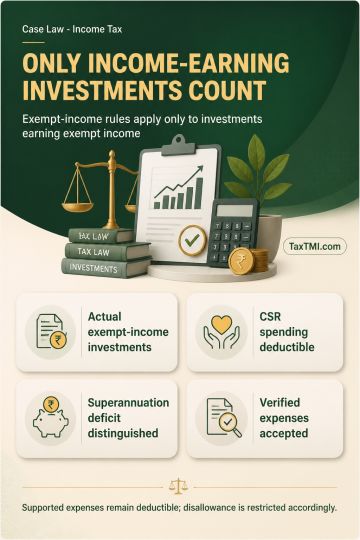
Exempt-income expenditure disallowance is confined to investments that actually generated exempt income, while supported business expenses remain dedu...
HC adjudicated a tax seizure case involving inter-unit transportation of goods. The court determined that no tax evasion occurred during the transfer of a compactor machine from Rajasthan to Uttar Pradesh. Despite initial interception due to missing documentation, the subsequent production of delivery challan and e-way bill demonstrated compliance. The court emphasized that stock transfers between organizational units without a sales transaction do not attract GST liability. Critically, the respondent authority failed to establish any deliberate intent to circumvent tax regulations. Relying on precedential reasoning, the HC ruled that procedural technicalities did not warrant punitive action. The petition was ultimately allowed, nullifying the seizure proceedings under Section 129 of the CGST Act.
HC adjudicated a tax seizure case involving inter-unit transportation of goods. The court determined that no tax evasion occurred during the transfer of a compactor machine from Rajasthan to Uttar Pradesh. Despite initial interception due to missing documentation, the subsequent production of delivery challan and e-way bill demonstrated compliance. The court emphasized that stock transfers between organizational units without a sales transaction do not attract GST liability. Critically, the respondent authority failed to establish any deliberate intent to circumvent tax regulations. Relying on precedential reasoning, the HC ruled that procedural technicalities did not warrant punitive action. The petition was ultimately allowed, nullifying the seizure proceedings under Section 129 of the CGST Act.
Note: It is a system-generated summary and is for quick reference only.
 TaxTMI
 of 4798











 Join Channel


 TaxTMI