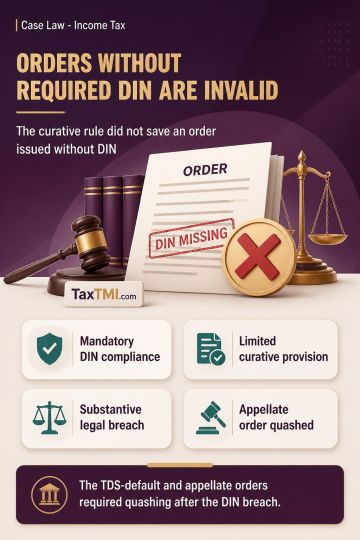
Document Identification Number compliance renders TDS-default orders invalid where mandatory DIN requirements are breached and curative provision does...
ITAT quashed PCIT's revision order under Section 263, finding no valid basis for challenging the original assessment. The Tribunal determined that PCIT's directions were vague, mechanical, and lacked substantive legal grounds. Key issues involving transfer pricing adjustments, interest on compulsorily convertible debentures, revenue recognition, and foreign equity transactions were deemed adequately examined in original proceedings. The Tribunal emphasized that PCIT failed to demonstrate how the original assessment order was erroneous or prejudicial to revenue interests. Consequently, the revision order was nullified, providing a comprehensive victory for the assessee by rejecting all proposed modifications to the original assessment.
ITAT quashed PCIT's revision order under Section 263, finding no valid basis for challenging the original assessment. The Tribunal determined that PCIT's directions were vague, mechanical, and lacked substantive legal grounds. Key issues involving transfer pricing adjustments, interest on compulsorily convertible debentures, revenue recognition, and foreign equity transactions were deemed adequately examined in original proceedings. The Tribunal emphasized that PCIT failed to demonstrate how the original assessment order was erroneous or prejudicial to revenue interests. Consequently, the revision order was nullified, providing a comprehensive victory for the assessee by rejecting all proposed modifications to the original assessment.
Note: It is a system-generated summary and is for quick reference only.
 TaxTMI
  TaxTMI
 of 4918