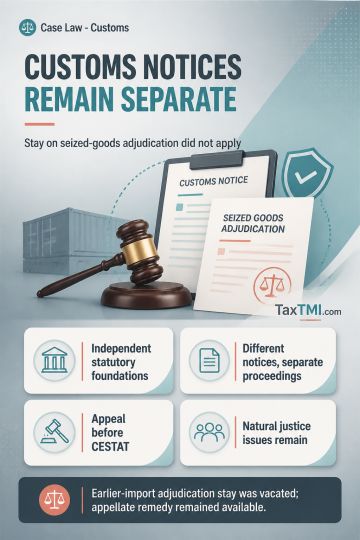
Independent show-cause notices remain separate proceedings, while customs adjudication challenges should ordinarily follow the statutory appellate rem...
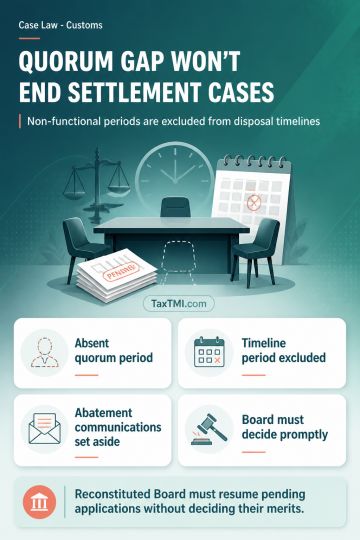
Institutional incapacity in customs settlement proceedings excludes non-functional quorum periods from statutory disposal timelines, preventing automa...
Interactive touchscreen panels with integrated computing functions fall under automatic data-processing machines rather than display monitors for cust...
Ex parte injunction service requirements were substantially met, while civil recovery and SFIO investigation into provident fund defalcation continued...
HC held that the 60-day period under Section 62(2) of GST Act is directory, not mandatory. The petitioner failed to file returns for October 2018 to March 2019 within prescribed time limit, resulting in a best judgment assessment order. The court determined that if an assessee demonstrates valid reasons beyond their control for delay, they can file returns after paying applicable interest and penalties. The petitioner was directed to submit an application for condonation of delay within 15 days, with the understanding that the tax authority shall consider such application on its merits, preserving the fundamental right to file returns.
HC held that the 60-day period under Section 62(2) of GST Act is directory, not mandatory. The petitioner failed to file returns for October 2018 to March 2019 within prescribed time limit, resulting in a best judgment assessment order. The court determined that if an assessee demonstrates valid reasons beyond their control for delay, they can file returns after paying applicable interest and penalties. The petitioner was directed to submit an application for condonation of delay within 15 days, with the understanding that the tax authority shall consider such application on its merits, preserving the fundamental right to file returns.
Note: It is a system-generated summary and is for quick reference only.
 TaxTMI
 of 4801












 Join Channel


 TaxTMI