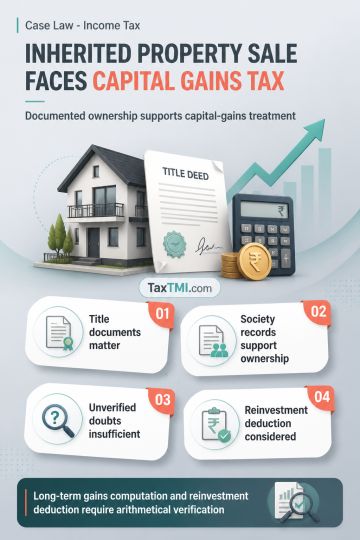
Inherited property sale proceeds require capital-gains treatment where ownership is supported by evidence, not suspicion or unverified signature doubt...
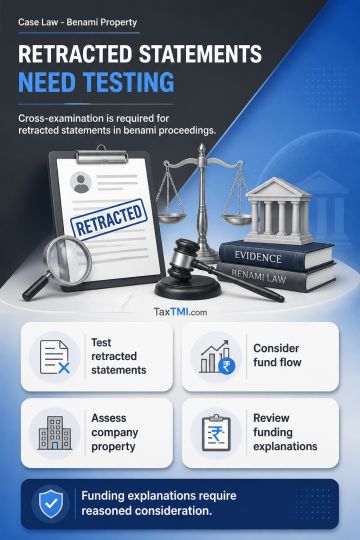
Cross-examination of retracted statements is essential where foundational evidence supports a benami allegation and documented funding explanations re...
Capital-goods exemption covers plant-modernisation accessories, while the import restriction applies only to earlier capital-goods components and spar...
Constitutional judicial review permits challenges to ECIRs and connected money-laundering proceedings where coercive action affects fundamental intere...
HC exercised inherent powers under Section 482 Cr.P.C. to quash criminal proceedings against petitioner-companies. The court determined that advances collected for immovable property sale were exempted from deposit regulations under Rule 2(1)(c)(xii)(b) of Companies (Acceptance of Deposit) Rules, 2014. The complaint was found to be maliciously instituted without substantive legal merit, lacking direct involvement of the complainant in the business transactions. The court concluded that continuing the proceedings would constitute an abuse of judicial process, thereby allowing the petition and quashing the criminal cases against the petitioners.
HC exercised inherent powers under Section 482 Cr.P.C. to quash criminal proceedings against petitioner-companies. The court determined that advances collected for immovable property sale were exempted from deposit regulations under Rule 2(1)(c)(xii)(b) of Companies (Acceptance of Deposit) Rules, 2014. The complaint was found to be maliciously instituted without substantive legal merit, lacking direct involvement of the complainant in the business transactions. The court concluded that continuing the proceedings would constitute an abuse of judicial process, thereby allowing the petition and quashing the criminal cases against the petitioners.
Note: It is a system-generated summary and is for quick reference only.
 TaxTMI
 of 4786






 Join Channel


 TaxTMI