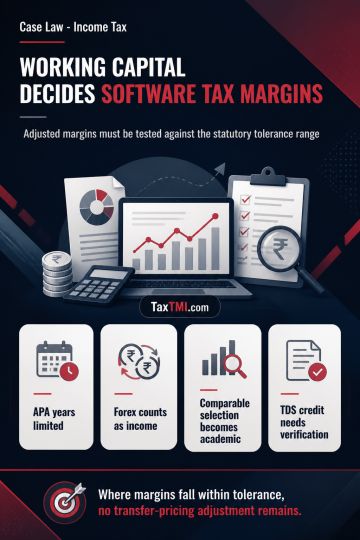
Working-capital adjustment determines whether software-services transfer-pricing margins fall within the statutory tolerance range, eliminating any ad...
Permanent establishment deductions upheld for expatriate salaries, direct costs and trading losses, while head-office costs require fresh classificati...
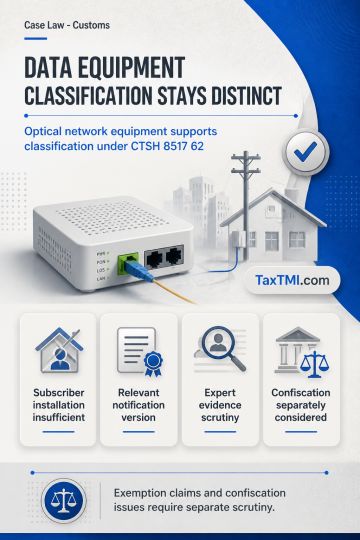
Data transmission equipment classification under CTSH 8517 62 remains distinct from residual classification, with exemption evidence requiring scrutin...
HC exercised inherent powers under Section 482 Cr.P.C. to quash criminal proceedings against petitioner-companies. The court determined that advances collected for immovable property sale were exempted from deposit regulations under Rule 2(1)(c)(xii)(b) of Companies (Acceptance of Deposit) Rules, 2014. The complaint was found to be maliciously instituted without substantive legal merit, lacking direct involvement of the complainant in the business transactions. The court concluded that continuing the proceedings would constitute an abuse of judicial process, thereby allowing the petition and quashing the criminal cases against the petitioners.
HC exercised inherent powers under Section 482 Cr.P.C. to quash criminal proceedings against petitioner-companies. The court determined that advances collected for immovable property sale were exempted from deposit regulations under Rule 2(1)(c)(xii)(b) of Companies (Acceptance of Deposit) Rules, 2014. The complaint was found to be maliciously instituted without substantive legal merit, lacking direct involvement of the complainant in the business transactions. The court concluded that continuing the proceedings would constitute an abuse of judicial process, thereby allowing the petition and quashing the criminal cases against the petitioners.
Note: It is a system-generated summary and is for quick reference only.
 TaxTMI
 of 4801
















 Join Channel


 TaxTMI