Mutual fund maturity rules require proper rollover, redemption, disclosure, and due diligence; investor gains cannot excuse regulatory breaches or pen...
Threshold exemption excludes exempt services, while stamp-paper purchases avoid reverse charge; consequential service tax penalties were also set asid...
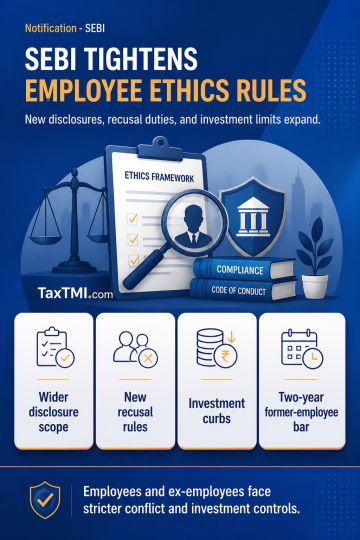
Employee conflict disclosures and investment restrictions expand with new recusal duties, post-employment limits, and compliance reporting requirement...
NCLAT upheld the capital reduction scheme under Section 66 of Companies Act, 2013. The tribunal found the selective capital reduction permissible, with 99.92% shareholder approval validating the minority shareholders' compulsory exit. The E&Y valuation at Rs. 196.80 per share was deemed independent and appropriate, rejecting arguments for control premium. The tribunal confirmed no violation of Section 102, noting no mandatory requirement to attach valuation reports for capital reduction. The 25% Discount for Liquidity of Marketability was justified. Ultimately, the appeal was dismissed, validating the company's capital reduction process and protecting majority shareholder interests.
NCLAT upheld the capital reduction scheme under Section 66 of Companies Act, 2013. The tribunal found the selective capital reduction permissible, with 99.92% shareholder approval validating the minority shareholders' compulsory exit. The E&Y valuation at Rs. 196.80 per share was deemed independent and appropriate, rejecting arguments for control premium. The tribunal confirmed no violation of Section 102, noting no mandatory requirement to attach valuation reports for capital reduction. The 25% Discount for Liquidity of Marketability was justified. Ultimately, the appeal was dismissed, validating the company's capital reduction process and protecting majority shareholder interests.
Note: It is a system-generated summary and is for quick reference only.
 TaxTMI
 of 4800













 Join Channel


 TaxTMI