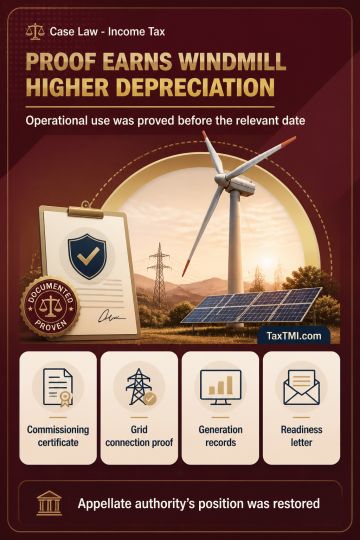
Windmill commissioning evidence supported higher depreciation where grid connection and electricity generation proved operational use before the relev...
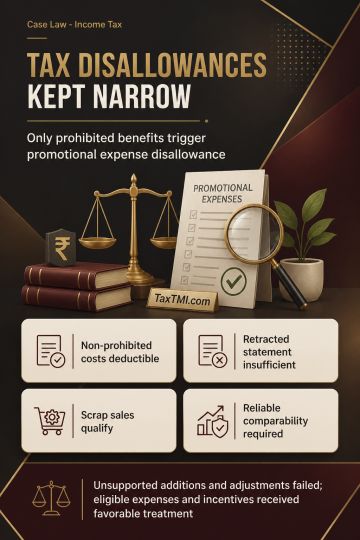
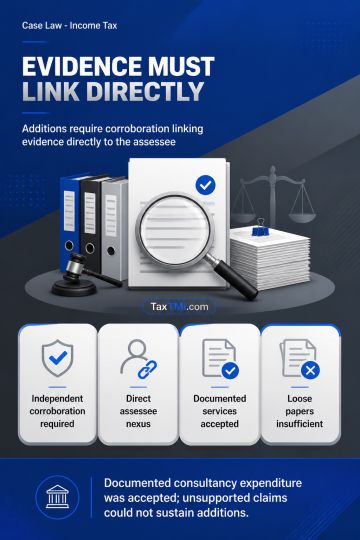
Pharmaceutical promotion and transfer-pricing comparability principles limited disallowances, while uncorroborated search allegations and unsupported ...
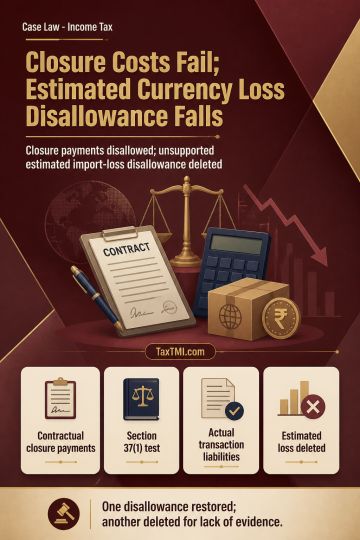
Business expenditure substantiation supports scrap credits, statutory payments and expense claims, while depreciation requires proof of actual busines...
The AAR determined that tapioca flour derived from dried tapioca root remnants is classified under Chapter heading 23031000, attracting 5% GST. The product, deemed unfit for human consumption and primarily used as livestock feed, was correctly categorized as "Residues of starch manufacture and similar residues". The ruling, based on the applicant's submitted facts, rejected the rectification application under Section 98(2) of CGST/TNGST Acts, 2017, finding no procedural errors in the original advance ruling.
The AAR determined that tapioca flour derived from dried tapioca root remnants is classified under Chapter heading 23031000, attracting 5% GST. The product, deemed unfit for human consumption and primarily used as livestock feed, was correctly categorized as "Residues of starch manufacture and similar residues". The ruling, based on the applicant's submitted facts, rejected the rectification application under Section 98(2) of CGST/TNGST Acts, 2017, finding no procedural errors in the original advance ruling.
Note: It is a system-generated summary and is for quick reference only.
 TaxTMI
 of 4803
















 Join Channel


 TaxTMI
