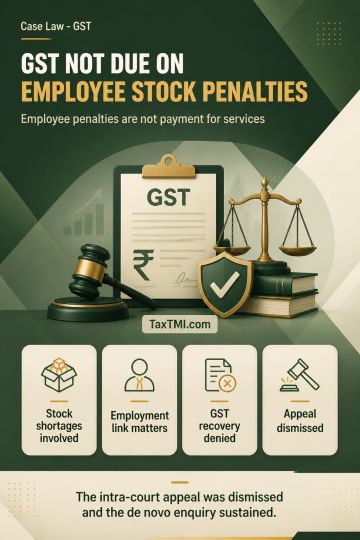
Employee stock-shortage penalties do not constitute consideration for services, preventing GST collection under Schedule II in employment relationship...
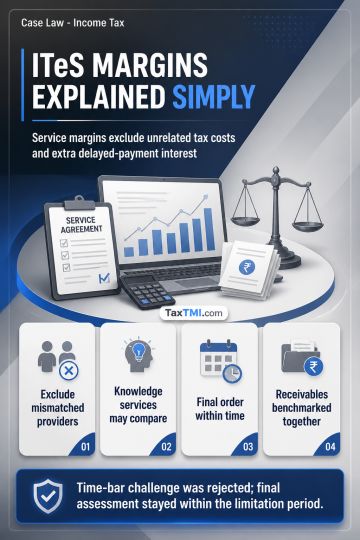
Transfer-pricing treatment of ITeS margins excludes pass-through tax recoveries and separate delayed-receivables interest after working-capital adjust...
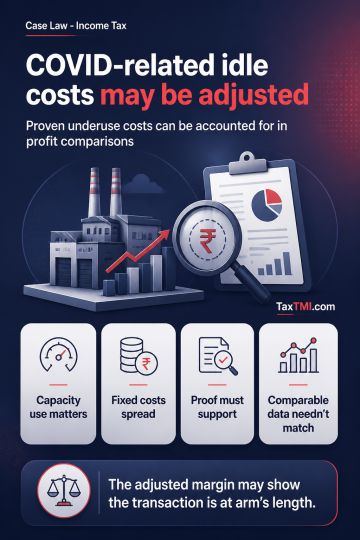
Capacity-utilisation adjustments under TNMM can neutralise substantiated COVID-related idle costs where underutilisation materially affects profitabil...
Page of 4830
Press 'Enter' after typing page number.
181 to 200 of 96587 Results
❮
❯
❯❯
0 / 200
Expand Note
Add to Folder
No Folders have been created
+
Are you sure you want to delete "My most important" ?
ITAT adjudicated a tax dispute concerning compensation receipt upon employment termination. The tribunal determined that ex-gratia payment constitutes a capital receipt, thus not taxable under section 17(3). Relying on precedential cases involving similar compensation scenarios, the tribunal ruled in favor of the assessee. The ex-gratia amount was characterized as capital in nature, consequently excluding it from taxable income. The appellate tribunal allowed the assessee's appeal, effectively exempting the compensation from tax liability and establishing a consistent interpretative approach for similar compensation-related tax assessments.
ITAT adjudicated a tax dispute concerning compensation receipt upon employment termination. The tribunal determined that ex-gratia payment constitutes a capital receipt, thus not taxable under section 17(3). Relying on precedential cases involving similar compensation scenarios, the tribunal ruled in favor of the assessee. The ex-gratia amount was characterized as capital in nature, consequently excluding it from taxable income. The appellate tribunal allowed the assessee's appeal, effectively exempting the compensation from tax liability and establishing a consistent interpretative approach for similar compensation-related tax assessments.
Note: It is a system-generated summary and is for quick reference only.
 TaxTMI
  TaxTMI
 of 4830



 Join Channel


