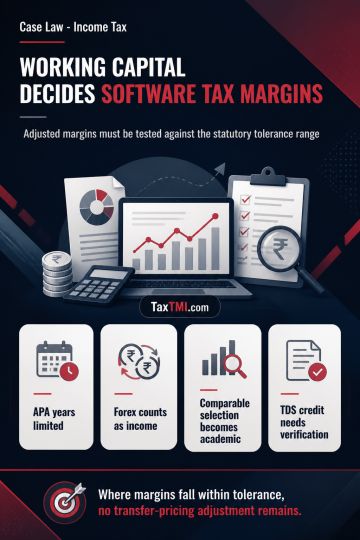
Working-capital adjustment determines whether software-services transfer-pricing margins fall within the statutory tolerance range, eliminating any ad...
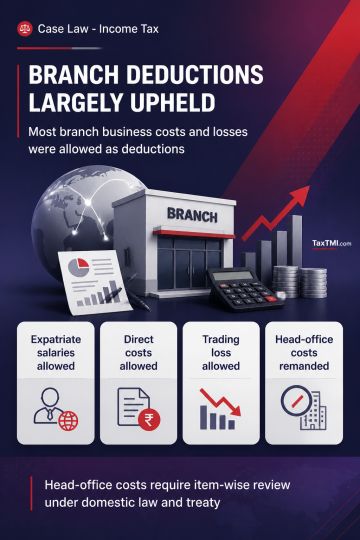
Permanent establishment deductions upheld for expatriate salaries, direct costs and trading losses, while head-office costs require fresh classificati...
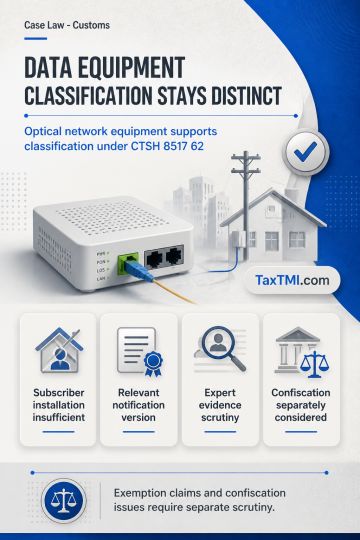
Data transmission equipment classification under CTSH 8517 62 remains distinct from residual classification, with exemption evidence requiring scrutin...
HC allowed the writ petition, setting aside the respondent's order rejecting the petitioner's application to rectify Form-3 under the Direct Tax Vivad Se Vishwas Act, 2020. The court interpreted Sections 2(j), 2(o), and 3 of the Act, determining that the petitioner is liable to pay only half the calculated tax amount. The court also clarified that if the petitioner had paid excess tax under the Income Tax Act, 1961, they would be entitled to a refund without interest, subject to the provisions of Section 7 of the Act.
HC allowed the writ petition, setting aside the respondent's order rejecting the petitioner's application to rectify Form-3 under the Direct Tax Vivad Se Vishwas Act, 2020. The court interpreted Sections 2(j), 2(o), and 3 of the Act, determining that the petitioner is liable to pay only half the calculated tax amount. The court also clarified that if the petitioner had paid excess tax under the Income Tax Act, 1961, they would be entitled to a refund without interest, subject to the provisions of Section 7 of the Act.
Note: It is a system-generated summary and is for quick reference only.
 TaxTMI
 of 4796







 Join Channel


 TaxTMI
