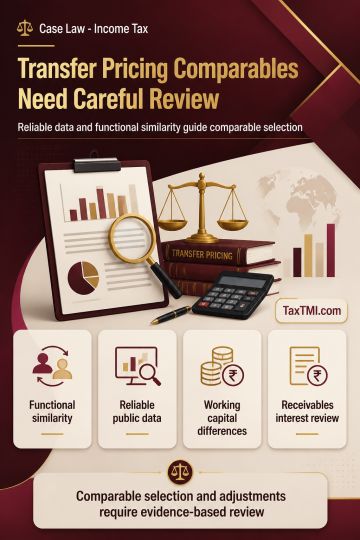
Transfer pricing comparability requires functional alignment, reliable financial data, and careful review of working capital and receivables adjustmen...
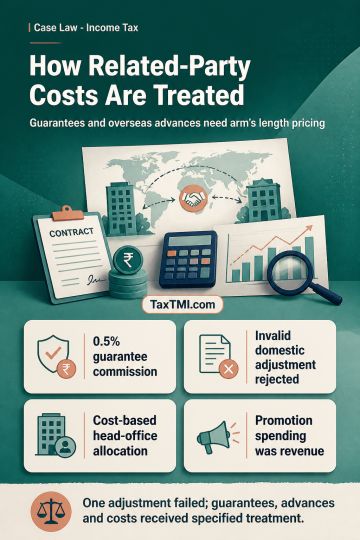
Transfer pricing rules require benchmarking corporate guarantees and associated-enterprise advances, while invalid domestic-transaction adjustments ca...
AAR ruled that businesses can utilize Rule 32(5) valuation (margin scheme) for second-hand goods while maintaining regular valuation for existing operations. Taxpayers may selectively apply this scheme to purchases from unregistered dealers while using standard GST procedures for registered dealer purchases. Under the margin scheme, the taxable value is the difference between selling price and purchase price, excluding repair/improvement costs. When using this scheme, input tax credit cannot be claimed on either purchase price or repair costs. Purchases of second-hand goods from unregistered dealers are exempt from reverse charge mechanism for intra-state supplies under Notification No. 10/2017-CT(R).
AAR ruled that businesses can utilize Rule 32(5) valuation (margin scheme) for second-hand goods while maintaining regular valuation for existing operations. Taxpayers may selectively apply this scheme to purchases from unregistered dealers while using standard GST procedures for registered dealer purchases. Under the margin scheme, the taxable value is the difference between selling price and purchase price, excluding repair/improvement costs. When using this scheme, input tax credit cannot be claimed on either purchase price or repair costs. Purchases of second-hand goods from unregistered dealers are exempt from reverse charge mechanism for intra-state supplies under Notification No. 10/2017-CT(R).
Note: It is a system-generated summary and is for quick reference only.
 TaxTMI
 of 4803





 Join Channel


 TaxTMI
