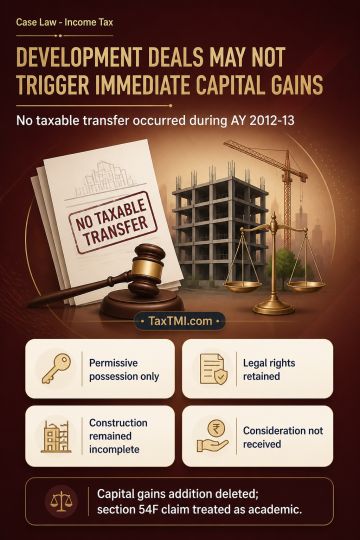
Development agreements require legal possession or effective enjoyment for capital gains transfer; permissive possession and deferred consideration de...
Prolonged sterilisation of development rights supports capital-gains treatment, while business-income disallowances cannot govern capital-gains comput...
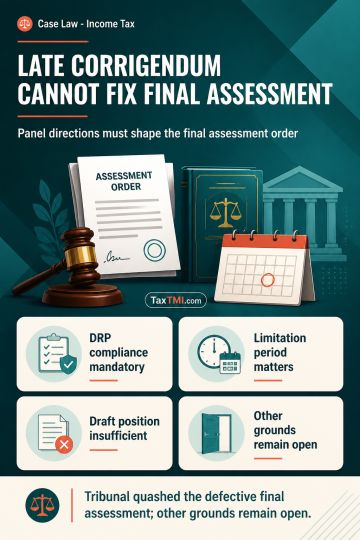
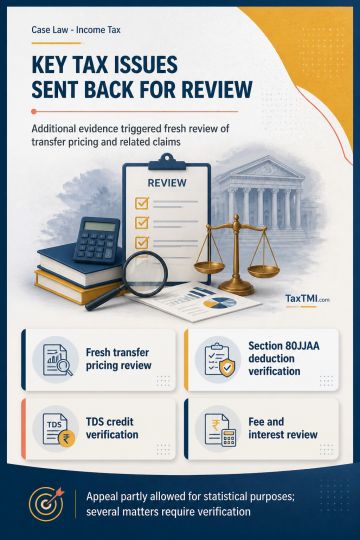
Additional evidence in transfer pricing dispute leads to fresh examination, while tax deductions, TDS credit, fee and refund interest require verifica...
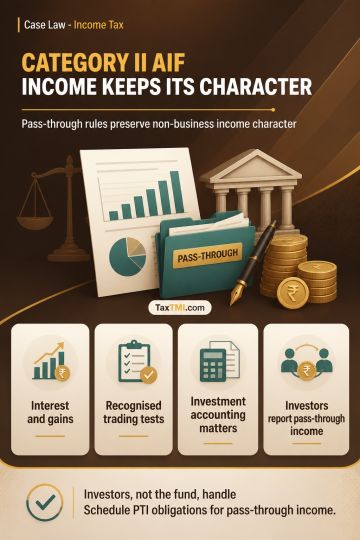
Category II AIF pass-through taxation preserves non-business income character; investment receipts cannot be reclassified without applying recognised ...
The AAR ruled that goods supplied by the applicant, despite being a victim of fraud without receiving consideration, still constituted a "supply" under GST law. The authority determined that while fraud may vitiate a contract, it does not negate the statutory definition of "supply" under section 7 of the CGST Act. The facts established that goods were physically removed and received at the destination, as confirmed by the FIR. The AAR concluded that the transaction qualified as supply of goods under section 20 of the IGST Act read with sections 12 and 7 of the CGST Act, regardless of the fraudulent nature of the order.
The AAR ruled that goods supplied by the applicant, despite being a victim of fraud without receiving consideration, still constituted a "supply" under GST law. The authority determined that while fraud may vitiate a contract, it does not negate the statutory definition of "supply" under section 7 of the CGST Act. The facts established that goods were physically removed and received at the destination, as confirmed by the FIR. The AAR concluded that the transaction qualified as supply of goods under section 20 of the IGST Act read with sections 12 and 7 of the CGST Act, regardless of the fraudulent nature of the order.
Note: It is a system-generated summary and is for quick reference only.
 TaxTMI
 of 4805







 Join Channel


 TaxTMI
