Fair-rent assessment requires consideration of lease terms, valuation principles and prevailing market rent; the certificate was quashed for fresh rev...
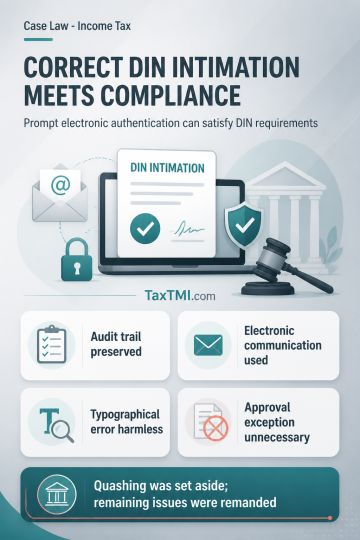
Document Identification Number compliance is satisfied when electronically communicated orders are promptly authenticated through a correctly identifi...
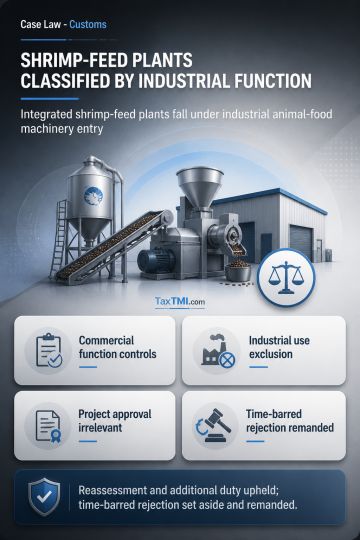
Industrial shrimp-feed machinery classification follows its commercial function, placing integrated production plants under the specific industrial fo...
The HC upheld the assessee's methodology for computing deduction under Section 36(1)(viii) of the I.T. Act. Since the assessee's accounts did not segregate actual expenditure for eligible business, the court approved the proportionate allocation method where the ratio of total income to total expenditure was applied to eligible business income to determine eligible business expenses. This approach was justified as the accounts showed gross income and expenditure for the entire business, as well as gross income for eligible business, but not specific expenditure for eligible business. The court confirmed that 20% of the resulting profit figure from eligible business qualified for deduction under Section 36(1)(viii).
The HC upheld the assessee's methodology for computing deduction under Section 36(1)(viii) of the I.T. Act. Since the assessee's accounts did not segregate actual expenditure for eligible business, the court approved the proportionate allocation method where the ratio of total income to total expenditure was applied to eligible business income to determine eligible business expenses. This approach was justified as the accounts showed gross income and expenditure for the entire business, as well as gross income for eligible business, but not specific expenditure for eligible business. The court confirmed that 20% of the resulting profit figure from eligible business qualified for deduction under Section 36(1)(viii).
Note: It is a system-generated summary and is for quick reference only.
 TaxTMI
 of 4805










 Join Channel


 TaxTMI
