Jurisdictional facts in certificate-of-origin discrepancies can support customs show-cause proceedings, leaving factual explanations for departmental ...
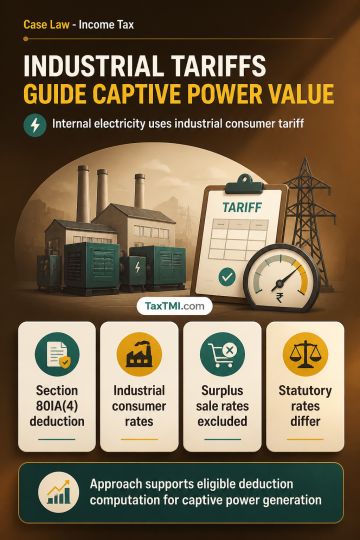
Market value for captive electricity consumption follows industrial consumer tariffs, supporting profit computation for the power generation deduction...
The HC upheld the assessee's methodology for computing deduction under Section 36(1)(viii) of the I.T. Act. Since the assessee's accounts did not segregate actual expenditure for eligible business, the court approved the proportionate allocation method where the ratio of total income to total expenditure was applied to eligible business income to determine eligible business expenses. This approach was justified as the accounts showed gross income and expenditure for the entire business, as well as gross income for eligible business, but not specific expenditure for eligible business. The court confirmed that 20% of the resulting profit figure from eligible business qualified for deduction under Section 36(1)(viii).
The HC upheld the assessee's methodology for computing deduction under Section 36(1)(viii) of the I.T. Act. Since the assessee's accounts did not segregate actual expenditure for eligible business, the court approved the proportionate allocation method where the ratio of total income to total expenditure was applied to eligible business income to determine eligible business expenses. This approach was justified as the accounts showed gross income and expenditure for the entire business, as well as gross income for eligible business, but not specific expenditure for eligible business. The court confirmed that 20% of the resulting profit figure from eligible business qualified for deduction under Section 36(1)(viii).
Note: It is a system-generated summary and is for quick reference only.
 TaxTMI
 of 4805













 Join Channel


 TaxTMI