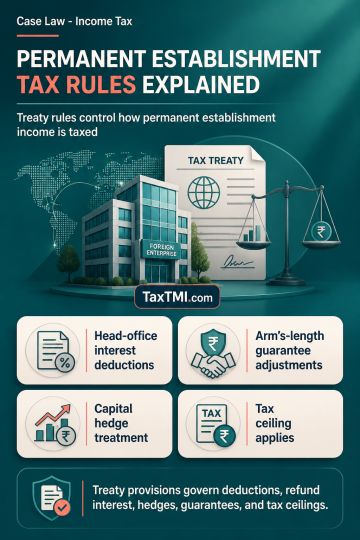
Business expenditure deduction requires proof of genuine commission payments and commercial allowability; turnover growth alone cannot validate the cl...
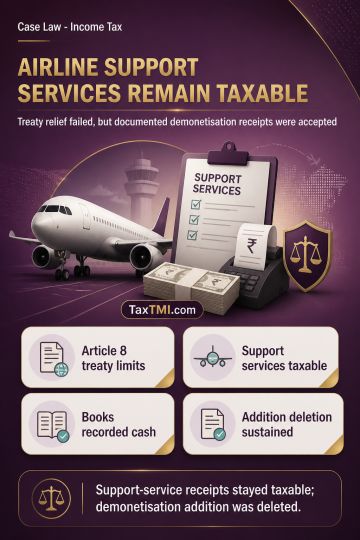
Article 8 treaty coverage excluded third-party airline support services, while documented demonetisation cash receipts remained accepted business inco...
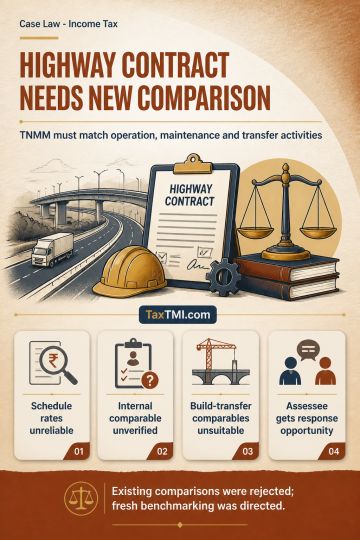
Functional comparability under TNMM requires highway contract benchmarks to reflect operation, maintenance and transfer activities, requiring fresh be...
The HC upheld the assessee's methodology for computing deduction under Section 36(1)(viii) of the I.T. Act. Since the assessee's accounts did not segregate actual expenditure for eligible business, the court approved the proportionate allocation method where the ratio of total income to total expenditure was applied to eligible business income to determine eligible business expenses. This approach was justified as the accounts showed gross income and expenditure for the entire business, as well as gross income for eligible business, but not specific expenditure for eligible business. The court confirmed that 20% of the resulting profit figure from eligible business qualified for deduction under Section 36(1)(viii).
The HC upheld the assessee's methodology for computing deduction under Section 36(1)(viii) of the I.T. Act. Since the assessee's accounts did not segregate actual expenditure for eligible business, the court approved the proportionate allocation method where the ratio of total income to total expenditure was applied to eligible business income to determine eligible business expenses. This approach was justified as the accounts showed gross income and expenditure for the entire business, as well as gross income for eligible business, but not specific expenditure for eligible business. The court confirmed that 20% of the resulting profit figure from eligible business qualified for deduction under Section 36(1)(viii).
Note: It is a system-generated summary and is for quick reference only.
 TaxTMI
 of 4805




 Join Channel


 TaxTMI