Commercial vehicle depreciation, scientifically determined warranty provisions and exempt-income disallowances were resolved in favour of the taxpayer...
Inherited property sale proceeds require capital-gains treatment where ownership is supported by evidence, not suspicion or unverified signature doubt...
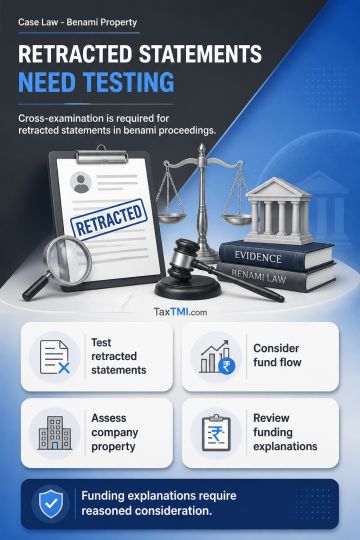
Cross-examination of retracted statements is essential where foundational evidence supports a benami allegation and documented funding explanations re...
The HC upheld the assessee's methodology for computing deduction under Section 36(1)(viii) of the I.T. Act. Since the assessee's accounts did not segregate actual expenditure for eligible business, the court approved the proportionate allocation method where the ratio of total income to total expenditure was applied to eligible business income to determine eligible business expenses. This approach was justified as the accounts showed gross income and expenditure for the entire business, as well as gross income for eligible business, but not specific expenditure for eligible business. The court confirmed that 20% of the resulting profit figure from eligible business qualified for deduction under Section 36(1)(viii).
The HC upheld the assessee's methodology for computing deduction under Section 36(1)(viii) of the I.T. Act. Since the assessee's accounts did not segregate actual expenditure for eligible business, the court approved the proportionate allocation method where the ratio of total income to total expenditure was applied to eligible business income to determine eligible business expenses. This approach was justified as the accounts showed gross income and expenditure for the entire business, as well as gross income for eligible business, but not specific expenditure for eligible business. The court confirmed that 20% of the resulting profit figure from eligible business qualified for deduction under Section 36(1)(viii).
Note: It is a system-generated summary and is for quick reference only.
 TaxTMI
 of 4803














 Join Channel


 TaxTMI