Transaction value cannot be rejected solely on non-statutory valuation guidelines without corroborative evidence supporting reassessment of final cust...
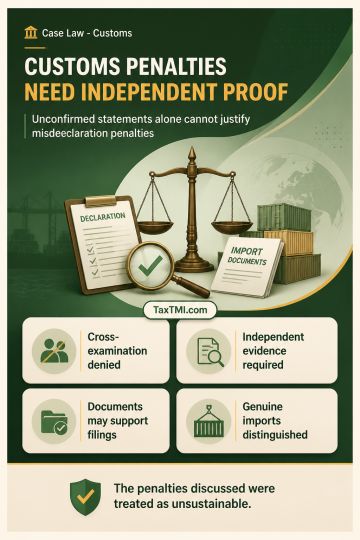
Cross-examination rights and corroborated evidence limit customs penalties for misdeclaration in genuine import transactions involving documented clea...
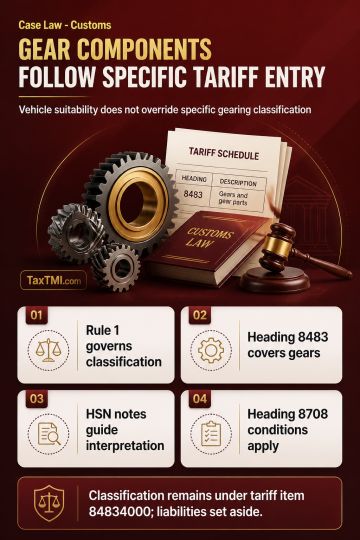
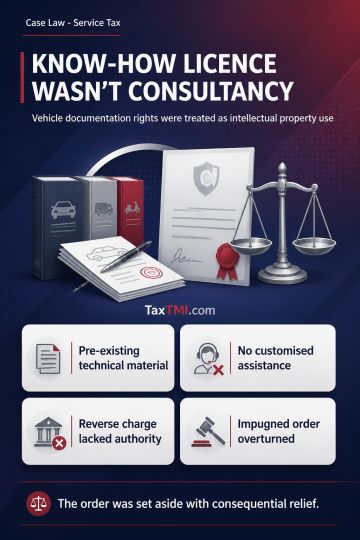
Tariff classification of vehicle gear components follows the specific gearing entry, displacing motor-vehicle parts classification and related liabili...
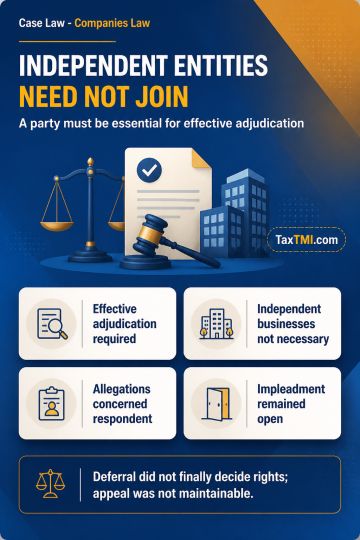
Necessary-party requirements limit impleadment of independent entities, while deferred consideration does not create an appealable adverse determinati...
Food supplement classification requires common parlance and authoritative tests, preventing treatment as proprietary Ayurvedic medicines without suppo...
The HC quashed non-bailable warrants issued against the petitioner accused of GST evasion through fake firms. The court held that non-bailable warrants should only be issued when an accused fails to appear after service of summons or bailable warrants. In this case, the petitioner had previously cooperated with the investigation, appeared before authorities, and provided statements. The court converted the non-bailable warrants to bailable warrants, noting that the petitioner showed no likelihood of evading legal process. Applying the principle from Tarsem Lal and Sharif Ahmed precedents, the HC emphasized that courts must consider whether an accused is likely to evade justice or tamper with evidence before issuing non-bailable warrants. The presumption of innocence was also affirmed as a fundamental principle of criminal jurisprudence.
The HC quashed non-bailable warrants issued against the petitioner accused of GST evasion through fake firms. The court held that non-bailable warrants should only be issued when an accused fails to appear after service of summons or bailable warrants. In this case, the petitioner had previously cooperated with the investigation, appeared before authorities, and provided statements. The court converted the non-bailable warrants to bailable warrants, noting that the petitioner showed no likelihood of evading legal process. Applying the principle from Tarsem Lal and Sharif Ahmed precedents, the HC emphasized that courts must consider whether an accused is likely to evade justice or tamper with evidence before issuing non-bailable warrants. The presumption of innocence was also affirmed as a fundamental principle of criminal jurisprudence.
Note: It is a system-generated summary and is for quick reference only.
 TaxTMI
 of 4805














 Join Channel


 TaxTMI
