Commercial vehicle depreciation, scientifically determined warranty provisions and exempt-income disallowances were resolved in favour of the taxpayer...
Inherited property sale proceeds require capital-gains treatment where ownership is supported by evidence, not suspicion or unverified signature doubt...
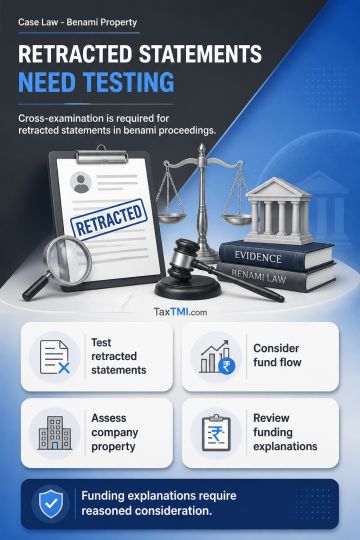
Cross-examination of retracted statements is essential where foundational evidence supports a benami allegation and documented funding explanations re...
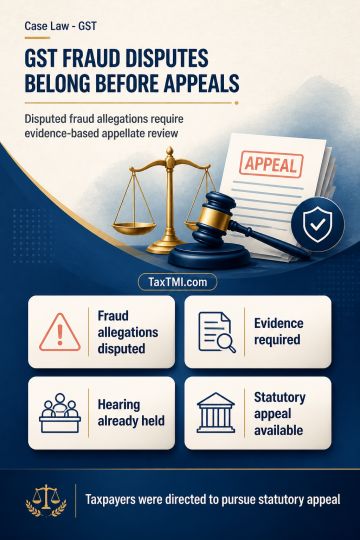
The HC quashed non-bailable warrants issued against the petitioner accused of GST evasion through fake firms. The court held that non-bailable warrants should only be issued when an accused fails to appear after service of summons or bailable warrants. In this case, the petitioner had previously cooperated with the investigation, appeared before authorities, and provided statements. The court converted the non-bailable warrants to bailable warrants, noting that the petitioner showed no likelihood of evading legal process. Applying the principle from Tarsem Lal and Sharif Ahmed precedents, the HC emphasized that courts must consider whether an accused is likely to evade justice or tamper with evidence before issuing non-bailable warrants. The presumption of innocence was also affirmed as a fundamental principle of criminal jurisprudence.
The HC quashed non-bailable warrants issued against the petitioner accused of GST evasion through fake firms. The court held that non-bailable warrants should only be issued when an accused fails to appear after service of summons or bailable warrants. In this case, the petitioner had previously cooperated with the investigation, appeared before authorities, and provided statements. The court converted the non-bailable warrants to bailable warrants, noting that the petitioner showed no likelihood of evading legal process. Applying the principle from Tarsem Lal and Sharif Ahmed precedents, the HC emphasized that courts must consider whether an accused is likely to evade justice or tamper with evidence before issuing non-bailable warrants. The presumption of innocence was also affirmed as a fundamental principle of criminal jurisprudence.
Note: It is a system-generated summary and is for quick reference only.
 TaxTMI
 of 4803




















 Join Channel


 TaxTMI