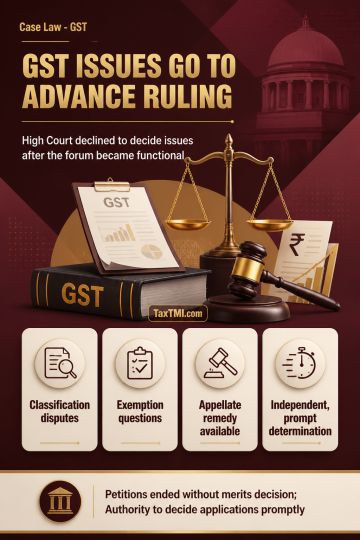
Advance-ruling mechanism governs pending GST classification, exemption and taxability disputes, limiting writ review once the specialised forum functi...
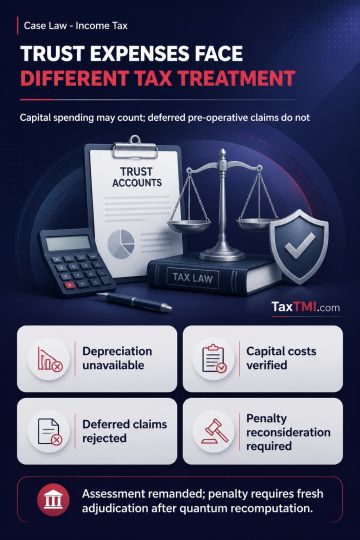
Charitable trust income application permits verified capital expenditure but rejects deferred pre-operative claims and requires reconsideration of con...
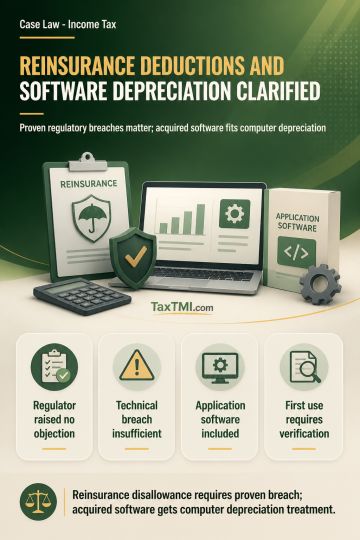
Reinsurance premium deductions require established regulatory breaches, while independently acquired software qualifies within the computer depreciati...
The HC issued a writ of mandamus directing NOIDA to compensate the petitioner, head of a Hindu Undivided Family, Rs. 19,22,778/- within 15 days for penalties imposed under the GST Act. NOIDA had acknowledged that the petitioner's GST payment was deposited under the wrong head due to their error, not the petitioner's fault. Following the Supreme Court's principle in Batliboi that compensation should not result in windfall for one party at another's expense, the court determined the petitioner should not suffer penalties for NOIDA's administrative mistake. NOIDA must notify the District Magistrate after payment and retains the right to recover the amount from its erring officers. Petition disposed of.
The HC issued a writ of mandamus directing NOIDA to compensate the petitioner, head of a Hindu Undivided Family, Rs. 19,22,778/- within 15 days for penalties imposed under the GST Act. NOIDA had acknowledged that the petitioner's GST payment was deposited under the wrong head due to their error, not the petitioner's fault. Following the Supreme Court's principle in Batliboi that compensation should not result in windfall for one party at another's expense, the court determined the petitioner should not suffer penalties for NOIDA's administrative mistake. NOIDA must notify the District Magistrate after payment and retains the right to recover the amount from its erring officers. Petition disposed of.
Note: It is a system-generated summary and is for quick reference only.
 TaxTMI
 of 4807










 Join Channel


 TaxTMI
