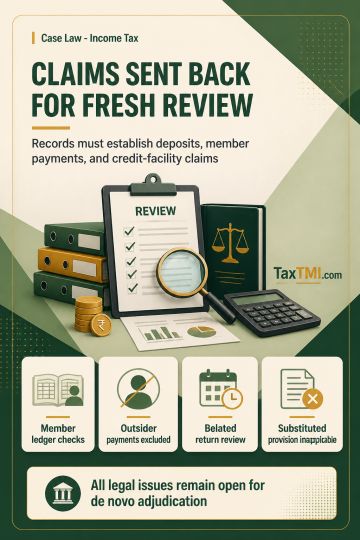
Cooperative society deposits, member-interest TDS exemption and credit-facility deduction claims require verification through records and supporting e...
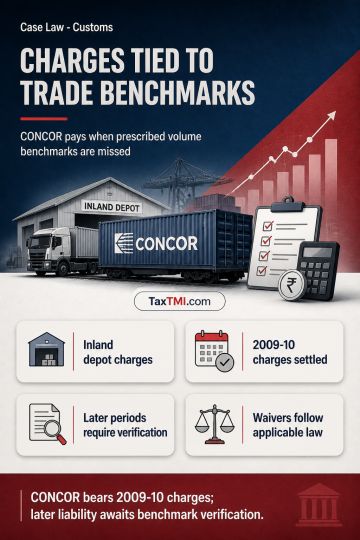
Customs jurisdiction over EPCG condition breaches survives export-obligation discharge certificates, requiring alleged fraud and misdeclaration to be ...
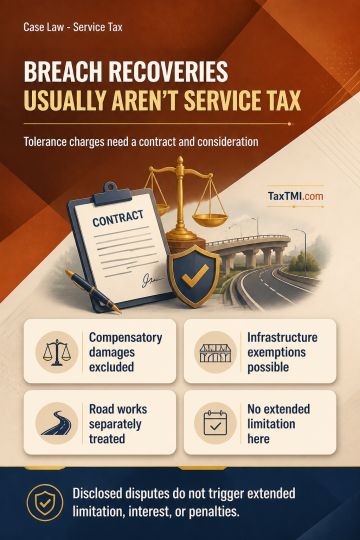
Contractual tolerance requires consideration; breach recoveries, qualifying public infrastructure services and road works escape service tax liability...
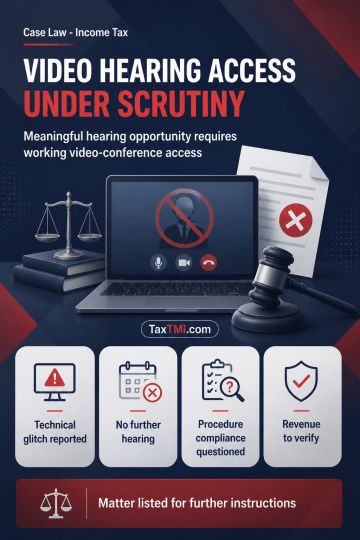
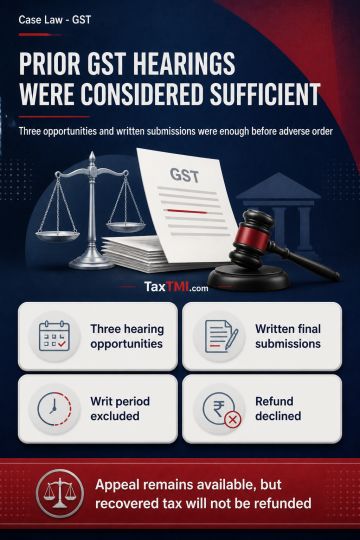
Personal hearing requirements in GST adjudication were satisfied by prior opportunities and written submissions; appellate limitation received writ-pe...
The HC ruled that the 60-day limitation period under Section 62(2) of the GST Act for filing returns after a best judgment assessment is directory rather than mandatory. If an assessee fails to file returns within this period due to reasons beyond their control, authorities may condone the delay upon application with sufficient justification. The taxpayer would then be permitted to file returns after paying applicable interest, penalties, and charges. The Court held that the right to file returns cannot be categorically denied based solely on non-compliance with the 60-day timeframe. The petitioner was directed to file a delay condonation application within 15 days.
The HC ruled that the 60-day limitation period under Section 62(2) of the GST Act for filing returns after a best judgment assessment is directory rather than mandatory. If an assessee fails to file returns within this period due to reasons beyond their control, authorities may condone the delay upon application with sufficient justification. The taxpayer would then be permitted to file returns after paying applicable interest, penalties, and charges. The Court held that the right to file returns cannot be categorically denied based solely on non-compliance with the 60-day timeframe. The petitioner was directed to file a delay condonation application within 15 days.
Note: It is a system-generated summary and is for quick reference only.
 TaxTMI
 of 4805




 Join Channel


 TaxTMI