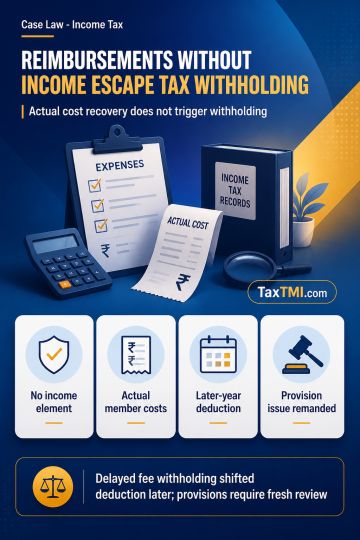
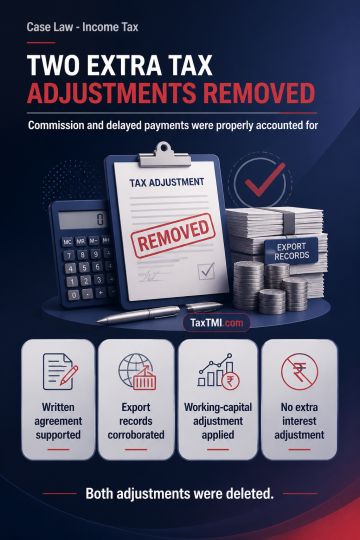
Pure reimbursement without income element escapes tax withholding, while delayed withholding and unsupported provisions face deferred or renewed scrut...
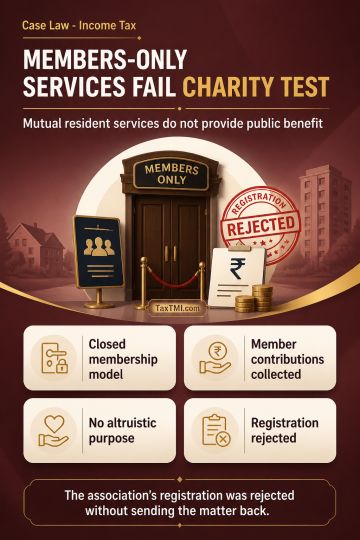
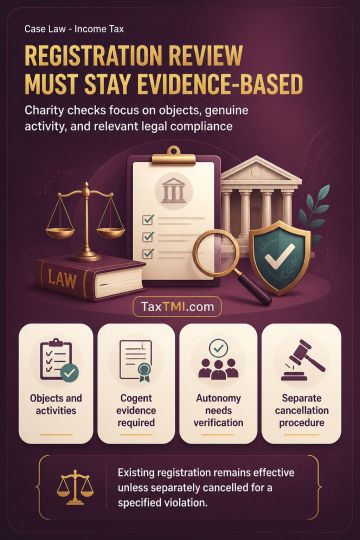
Public benefit requirement defeats charitable registration where residents' association services are reciprocal, member-only facilities governed by mu...
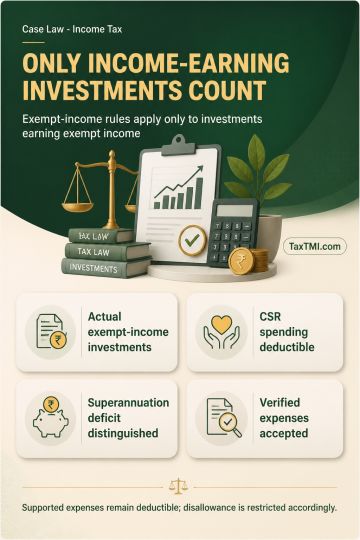
Exempt-income expenditure disallowance is confined to investments that actually generated exempt income, while supported business expenses remain dedu...
Objective characteristics and principal use govern mining-tyre classification, while fresh advance ruling applications may rely on additional technica...
The HC ruled that the 60-day limitation period under Section 62(2) of the GST Act for filing returns after a best judgment assessment is directory rather than mandatory. If an assessee fails to file returns within this period due to reasons beyond their control, authorities may condone the delay upon application with sufficient justification. The taxpayer would then be permitted to file returns after paying applicable interest, penalties, and charges. The Court held that the right to file returns cannot be categorically denied based solely on non-compliance with the 60-day timeframe. The petitioner was directed to file a delay condonation application within 15 days.
The HC ruled that the 60-day limitation period under Section 62(2) of the GST Act for filing returns after a best judgment assessment is directory rather than mandatory. If an assessee fails to file returns within this period due to reasons beyond their control, authorities may condone the delay upon application with sufficient justification. The taxpayer would then be permitted to file returns after paying applicable interest, penalties, and charges. The Court held that the right to file returns cannot be categorically denied based solely on non-compliance with the 60-day timeframe. The petitioner was directed to file a delay condonation application within 15 days.
Note: It is a system-generated summary and is for quick reference only.
 TaxTMI
 of 4803







 Join Channel


 TaxTMI
