Transaction value rejection requires reliable corroboration; refundable VAT is excluded and temporary registration does not defeat new-vehicle exempti...
Appellate jurisdiction remains available where a wrist-worn gold ornament cannot conclusively be characterised as imported baggage at the preliminary ...
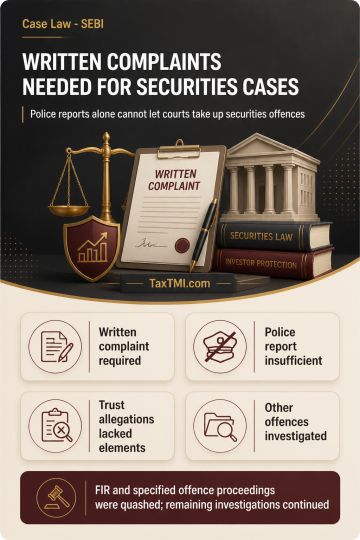
Written complaint requirement bars cognizance on police reports for securities offences, while unsupported breach of trust and cheating allegations fa...
The HC ruled that the 60-day limitation period under Section 62(2) of the GST Act for filing returns after a best judgment assessment is directory rather than mandatory. If an assessee fails to file returns within this period due to reasons beyond their control, authorities may condone the delay upon application with sufficient justification. The taxpayer would then be permitted to file returns after paying applicable interest, penalties, and charges. The Court held that the right to file returns cannot be categorically denied based solely on non-compliance with the 60-day timeframe. The petitioner was directed to file a delay condonation application within 15 days.
The HC ruled that the 60-day limitation period under Section 62(2) of the GST Act for filing returns after a best judgment assessment is directory rather than mandatory. If an assessee fails to file returns within this period due to reasons beyond their control, authorities may condone the delay upon application with sufficient justification. The taxpayer would then be permitted to file returns after paying applicable interest, penalties, and charges. The Court held that the right to file returns cannot be categorically denied based solely on non-compliance with the 60-day timeframe. The petitioner was directed to file a delay condonation application within 15 days.
Note: It is a system-generated summary and is for quick reference only.
 TaxTMI
 of 4796










 Join Channel


 TaxTMI
