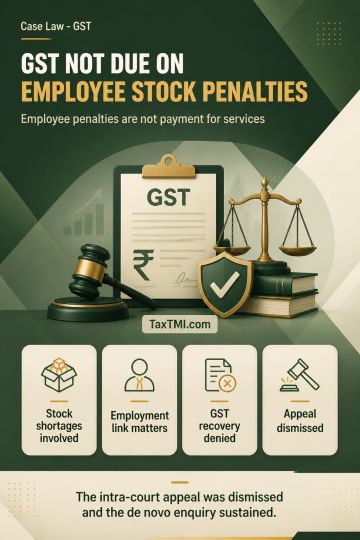
Employee stock-shortage penalties do not constitute consideration for services, preventing GST collection under Schedule II in employment relationship...
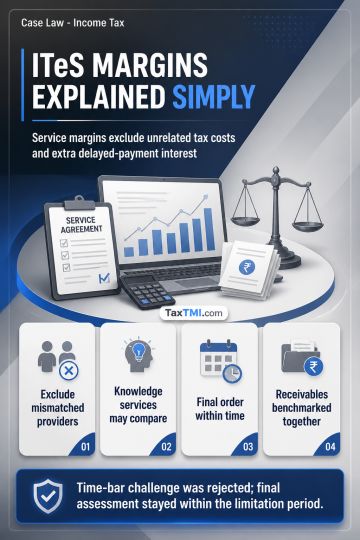
Transfer-pricing treatment of ITeS margins excludes pass-through tax recoveries and separate delayed-receivables interest after working-capital adjust...
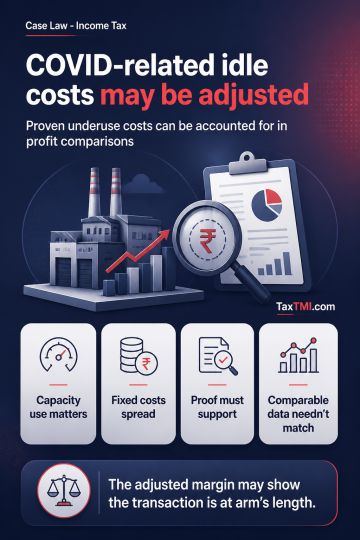
Capacity-utilisation adjustments under TNMM can neutralise substantiated COVID-related idle costs where underutilisation materially affects profitabil...
Page of 4830
Press 'Enter' after typing page number.
181 to 200 of 96587 Results
❮
❯
❯❯
0 / 200
Expand Note
Add to Folder
No Folders have been created
+
Are you sure you want to delete "My most important" ?
The HC quashed proceedings against petitioners under Companies Act sections 129/448 for non-disclosure of specified bank notes transactions during demonetization period. The court found the prosecution procedurally defective as the complaint lacked proper satisfaction of prima facie case against the accused. While section 129(7) imposes penalties for non-compliance with financial statement requirements, the court noted that section 439 creates a specific jurisdictional bar requiring complaints be filed by authorized persons. Additionally, the court determined that essential elements of fraud under section 448 were not established, as the auditor merely reported inability to provide details rather than intentional false statements. The HC deemed the proceedings an abuse of process, particularly as no third party was prejudiced by the alleged non-disclosure, and accordingly allowed the application.
The HC quashed proceedings against petitioners under Companies Act sections 129/448 for non-disclosure of specified bank notes transactions during demonetization period. The court found the prosecution procedurally defective as the complaint lacked proper satisfaction of prima facie case against the accused. While section 129(7) imposes penalties for non-compliance with financial statement requirements, the court noted that section 439 creates a specific jurisdictional bar requiring complaints be filed by authorized persons. Additionally, the court determined that essential elements of fraud under section 448 were not established, as the auditor merely reported inability to provide details rather than intentional false statements. The HC deemed the proceedings an abuse of process, particularly as no third party was prejudiced by the alleged non-disclosure, and accordingly allowed the application.
Note: It is a system-generated summary and is for quick reference only.
 TaxTMI
  TaxTMI
 of 4830



 Join Channel


