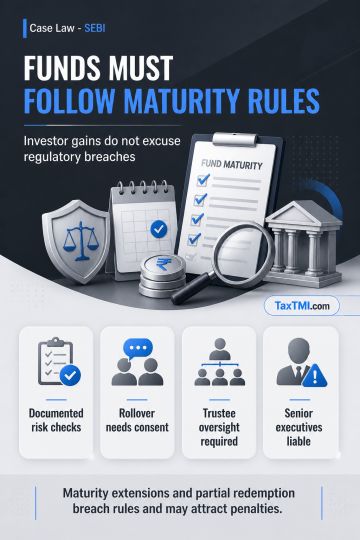
Mutual fund maturity rules require proper rollover, redemption, disclosure, and due diligence; investor gains cannot excuse regulatory breaches or pen...
Threshold exemption excludes exempt services, while stamp-paper purchases avoid reverse charge; consequential service tax penalties were also set asid...
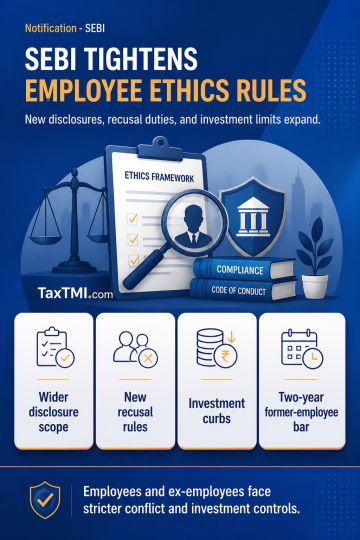
Employee conflict disclosures and investment restrictions expand with new recusal duties, post-employment limits, and compliance reporting requirement...
The DSC dismissed the first regular bail application of the accused under Sections 132(1)(b), 132(1)(c), and 132(1)(i) of CGST Act, 2017. The accused was identified as the mastermind in defrauding the government exchequer by creating and operating multiple firms, issuing fake tax invoices for Copper Scrap without actual supply of goods, and fraudulently availing Input Tax Credit. The court determined this constituted a grave economic offense with GST evasion amounting to Rs. 59,00,98,178/-. Considering the gravity of the offense, ongoing investigation, risk of evidence tampering, potential witness influence, and flight risk, the court found it inappropriate to grant bail at this stage.
The DSC dismissed the first regular bail application of the accused under Sections 132(1)(b), 132(1)(c), and 132(1)(i) of CGST Act, 2017. The accused was identified as the mastermind in defrauding the government exchequer by creating and operating multiple firms, issuing fake tax invoices for Copper Scrap without actual supply of goods, and fraudulently availing Input Tax Credit. The court determined this constituted a grave economic offense with GST evasion amounting to Rs. 59,00,98,178/-. Considering the gravity of the offense, ongoing investigation, risk of evidence tampering, potential witness influence, and flight risk, the court found it inappropriate to grant bail at this stage.
Note: It is a system-generated summary and is for quick reference only.
 TaxTMI
 of 4805












 Join Channel


 TaxTMI