Clean slate principle extinguishes uncrystallised operational claims and bars continuation of pending recovery and arbitral proceedings after plan app...
Works contract classification governs composite layout-development contracts where VAT-paid goods are transferred alongside construction and infrastru...
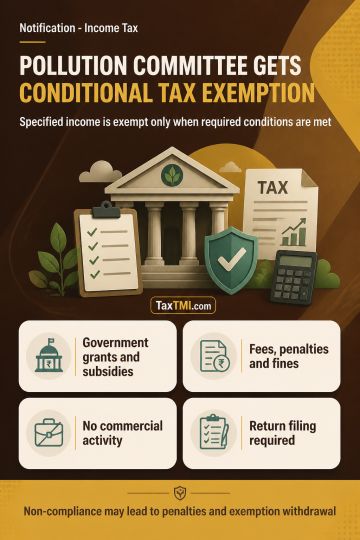
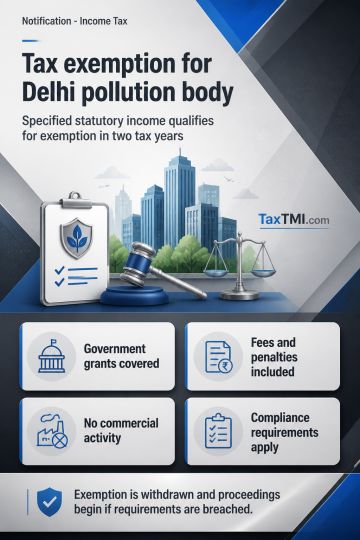
Specified income tax exemption for pollution control body remains conditional on non-commercial activity, unchanged income character, and return filin...
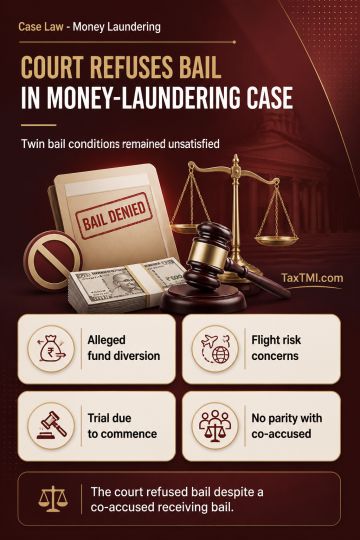
The DSC dismissed the first regular bail application of the accused under Sections 132(1)(b), 132(1)(c), and 132(1)(i) of CGST Act, 2017. The accused was identified as the mastermind in defrauding the government exchequer by creating and operating multiple firms, issuing fake tax invoices for Copper Scrap without actual supply of goods, and fraudulently availing Input Tax Credit. The court determined this constituted a grave economic offense with GST evasion amounting to Rs. 59,00,98,178/-. Considering the gravity of the offense, ongoing investigation, risk of evidence tampering, potential witness influence, and flight risk, the court found it inappropriate to grant bail at this stage.
The DSC dismissed the first regular bail application of the accused under Sections 132(1)(b), 132(1)(c), and 132(1)(i) of CGST Act, 2017. The accused was identified as the mastermind in defrauding the government exchequer by creating and operating multiple firms, issuing fake tax invoices for Copper Scrap without actual supply of goods, and fraudulently availing Input Tax Credit. The court determined this constituted a grave economic offense with GST evasion amounting to Rs. 59,00,98,178/-. Considering the gravity of the offense, ongoing investigation, risk of evidence tampering, potential witness influence, and flight risk, the court found it inappropriate to grant bail at this stage.
Note: It is a system-generated summary and is for quick reference only.
 TaxTMI
 of 4805













 Join Channel


 TaxTMI