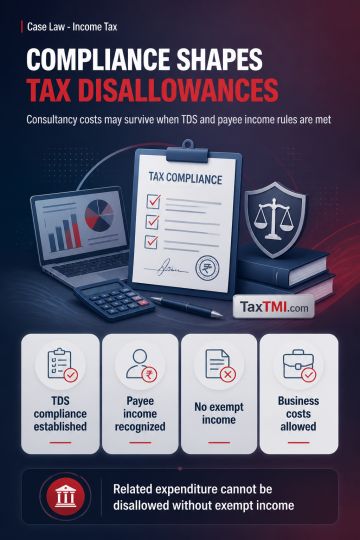
Tax deduction compliance and payee income recognition govern consultancy disallowance, while no exempt income prevents related expenditure disallowanc...
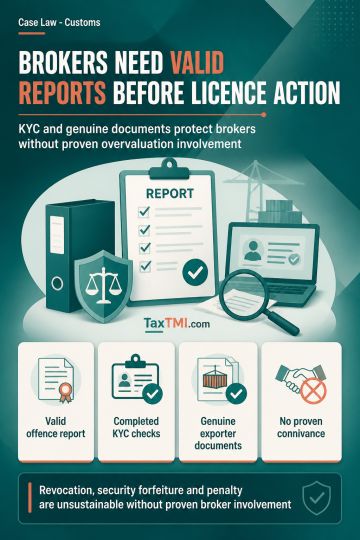
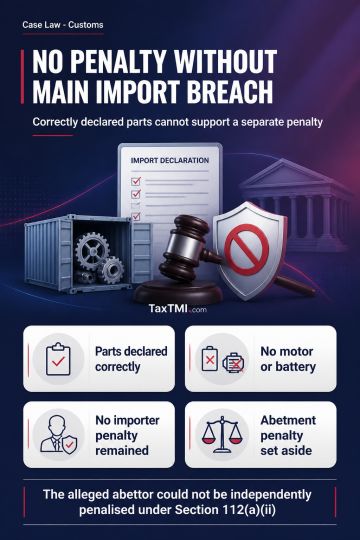
Derivative abetment liability fails when correctly declared imported components establish no underlying improper importation by the principal importer...
Tax exemption for regulatory authority income applies retrospectively, subject to non-commercial activity, unchanged income sources, and return filing...
The DSC dismissed the first regular bail application of the accused under Sections 132(1)(b), 132(1)(c), and 132(1)(i) of CGST Act, 2017. The accused was identified as the mastermind in defrauding the government exchequer by creating and operating multiple firms, issuing fake tax invoices for Copper Scrap without actual supply of goods, and fraudulently availing Input Tax Credit. The court determined this constituted a grave economic offense with GST evasion amounting to Rs. 59,00,98,178/-. Considering the gravity of the offense, ongoing investigation, risk of evidence tampering, potential witness influence, and flight risk, the court found it inappropriate to grant bail at this stage.
The DSC dismissed the first regular bail application of the accused under Sections 132(1)(b), 132(1)(c), and 132(1)(i) of CGST Act, 2017. The accused was identified as the mastermind in defrauding the government exchequer by creating and operating multiple firms, issuing fake tax invoices for Copper Scrap without actual supply of goods, and fraudulently availing Input Tax Credit. The court determined this constituted a grave economic offense with GST evasion amounting to Rs. 59,00,98,178/-. Considering the gravity of the offense, ongoing investigation, risk of evidence tampering, potential witness influence, and flight risk, the court found it inappropriate to grant bail at this stage.
Note: It is a system-generated summary and is for quick reference only.
 TaxTMI
 of 4803










 Join Channel


 TaxTMI