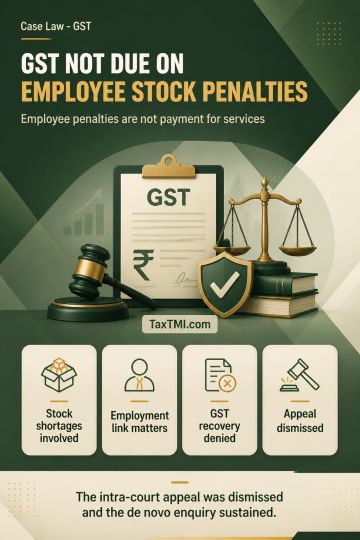
Employee stock-shortage penalties do not constitute consideration for services, preventing GST collection under Schedule II in employment relationship...
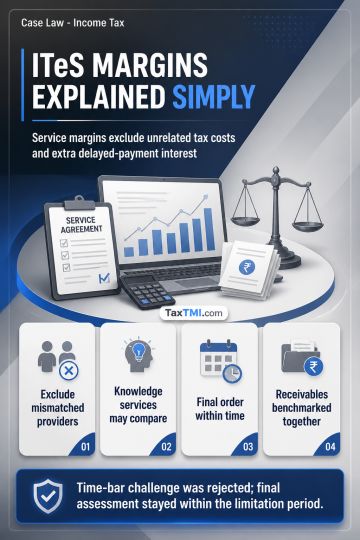
Transfer-pricing treatment of ITeS margins excludes pass-through tax recoveries and separate delayed-receivables interest after working-capital adjust...
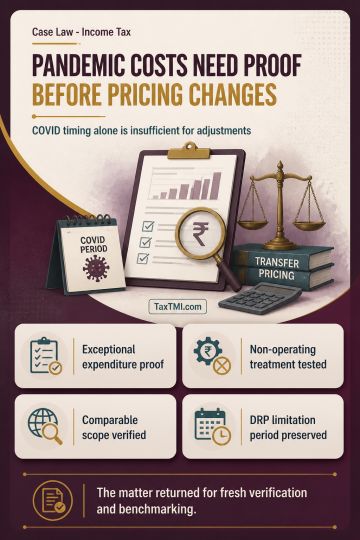
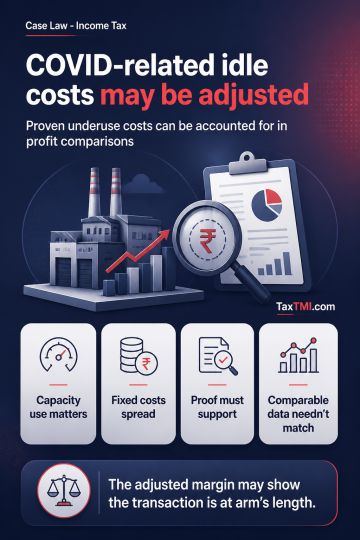
Capacity-utilisation adjustments under TNMM can neutralise substantiated COVID-related idle costs where underutilisation materially affects profitabil...
Page of 4830
Press 'Enter' after typing page number.
181 to 200 of 96587 Results
❮
❯
❯❯
0 / 200
Expand Note
Add to Folder
No Folders have been created
+
Are you sure you want to delete "My most important" ?
The HC held that the period of limitation for reopening assessments under Section 153C read with Section 153A must be calculated from the end of the assessment year relevant to the financial year in which the reopening action was initiated (i.e., when the Section 148 notice was issued). Since the assessment year in question (AY 2014-15) fell beyond the ten-year limitation period contemplated in these provisions, the Court allowed the petition and set aside the impugned notice as time-barred. This ruling clarifies how the block period for reopening assessments should be determined when applying limitation provisions.
The HC held that the period of limitation for reopening assessments under Section 153C read with Section 153A must be calculated from the end of the assessment year relevant to the financial year in which the reopening action was initiated (i.e., when the Section 148 notice was issued). Since the assessment year in question (AY 2014-15) fell beyond the ten-year limitation period contemplated in these provisions, the Court allowed the petition and set aside the impugned notice as time-barred. This ruling clarifies how the block period for reopening assessments should be determined when applying limitation provisions.
Note: It is a system-generated summary and is for quick reference only.
 TaxTMI
  TaxTMI
 of 4830



 Join Channel


