TNMM functional comparability requires excluding rice manufacturers from a pure Basmati rice trader's benchmark and recognising operating export recei...
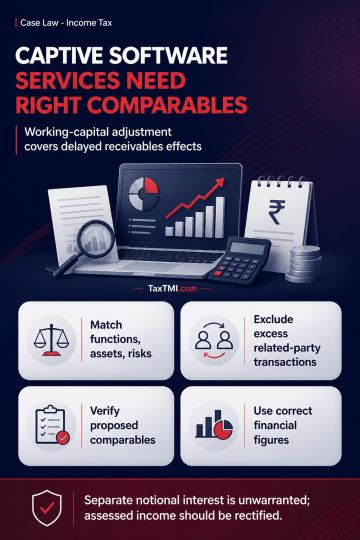
Working-capital adjustment subsumes delayed-receivable effects in TNMM benchmarking of captive software-development services, avoiding separate notion...
Transfer-pricing comparability requires exclusion of financially illogical super-profit comparables and correction of unsupported annual-report and ma...
Charitable character assessment preserves Section 80G approval despite inclusive spiritual teachings and incidental religious expenditure within the s...
Penalty proceedings for cash-loan acceptance require assessment proceedings and recorded Assessing Officer satisfaction; absent these, the proceedings...
Functional comparability governs software-service benchmarking: dissimilar companies are excluded, while related-party filters, margins and working-ca...
The SC held that upon approval of a resolution plan under Section 31 of the Insolvency and Bankruptcy Code, all dues not included in the plan are extinguished, including statutory dues owed to government authorities. The Court determined that authorities' attempts to recover pre-resolution plan dues were contemptuous, as these claims were not submitted during the resolution process despite public notice. While finding the respondents' actions contemptuous for continuing recovery proceedings after the Ghanshyam Mishra judgment was brought to their attention, the Court declined to impose penalties, giving them the benefit of doubt. The demand notices and subsequent proceedings were quashed as illegal, and the contempt petition was disposed of after accepting the contemnors' unconditional apology.
The SC held that upon approval of a resolution plan under Section 31 of the Insolvency and Bankruptcy Code, all dues not included in the plan are extinguished, including statutory dues owed to government authorities. The Court determined that authorities' attempts to recover pre-resolution plan dues were contemptuous, as these claims were not submitted during the resolution process despite public notice. While finding the respondents' actions contemptuous for continuing recovery proceedings after the Ghanshyam Mishra judgment was brought to their attention, the Court declined to impose penalties, giving them the benefit of doubt. The demand notices and subsequent proceedings were quashed as illegal, and the contempt petition was disposed of after accepting the contemnors' unconditional apology.
Note: It is a system-generated summary and is for quick reference only.
 TaxTMI
  TaxTMI
 of 4830


















 Join Channel


