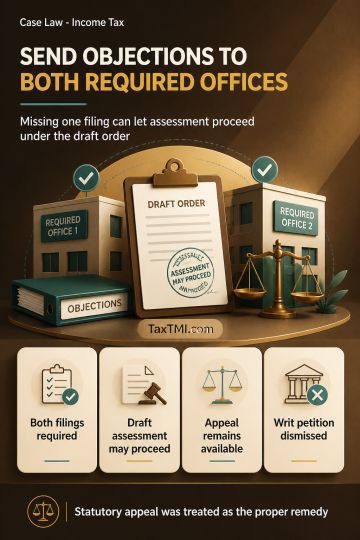
Dispute Resolution Panel objections must reach both prescribed forums; otherwise assessment may proceed and statutory appeal remains the proper remedy...
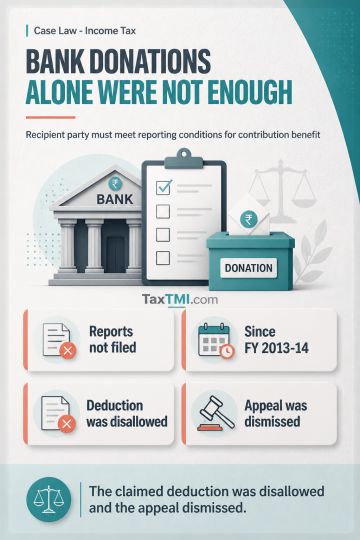
Political contribution deductions require recipient party compliance with contribution-reporting conditions; banking-channel donations alone do not qu...
Aggregation under TNMM prevents selective testing of intra-group services without comparable uncontrolled transactions, while appellate additional cla...
Protective assessment cannot duplicate identical receipts under competing characterisations; remote services did not establish a taxable permanent est...
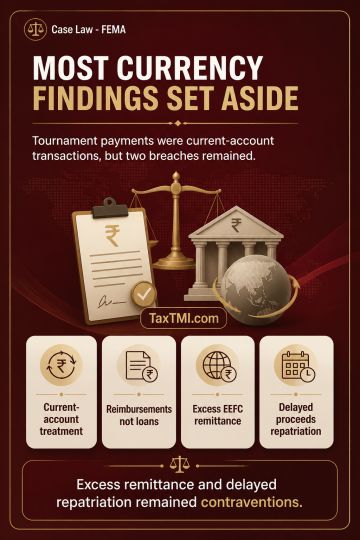
Current account treatment of overseas tournament services removed most FEMA findings, but excess EEFC remittance and delayed repatriation remained bre...
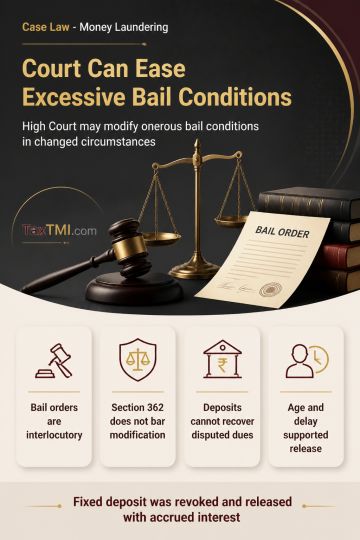
Modification of bail conditions remains available through inherent jurisdiction where onerous deposits undermine justice and cannot recover disputed d...
The HC addressed a challenge to a summons issued under s.70 of the GST Act seeking information from the petitioner. The court clarified that s.74 of the CGST Act applies to tax evasion cases involving willful misstatement or fraud, permitting penalties up to 100% of unpaid tax, with reduced penalties available at various stages of admission and payment. The court determined that the 2nd respondent's communication aligned with s.74 provisions and did not create liability or initiate proceedings against the petitioner. The petition was closed, preserving the petitioner's right to oppose any future proceedings for tax short payment, evasion, or wrongful ITC availment.
The HC addressed a challenge to a summons issued under s.70 of the GST Act seeking information from the petitioner. The court clarified that s.74 of the CGST Act applies to tax evasion cases involving willful misstatement or fraud, permitting penalties up to 100% of unpaid tax, with reduced penalties available at various stages of admission and payment. The court determined that the 2nd respondent's communication aligned with s.74 provisions and did not create liability or initiate proceedings against the petitioner. The petition was closed, preserving the petitioner's right to oppose any future proceedings for tax short payment, evasion, or wrongful ITC availment.
Note: It is a system-generated summary and is for quick reference only.
 TaxTMI
 of 4805












 Join Channel


 TaxTMI
