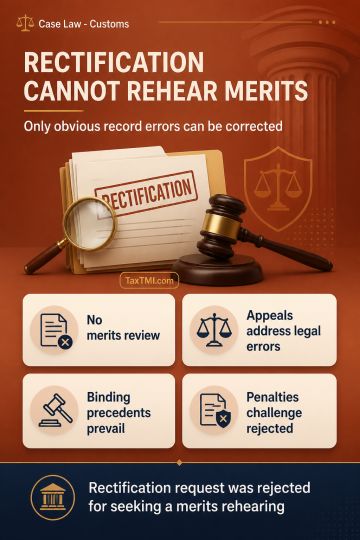
Rectification of mistake remains limited to self-evident record errors, preventing merits review through miscellaneous applications and preserving fin...
Tender creditworthiness conditions may extend to de facto Promoter Directors, with post-participation challenges generally barred absent arbitrariness...
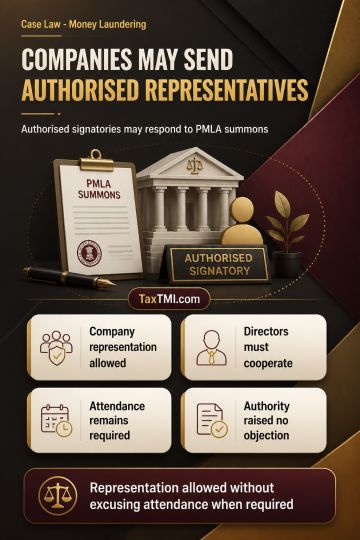
Corporate representation in PMLA summons proceedings permitted through an authorised signatory, subject to directors' continuing cooperation and atten...
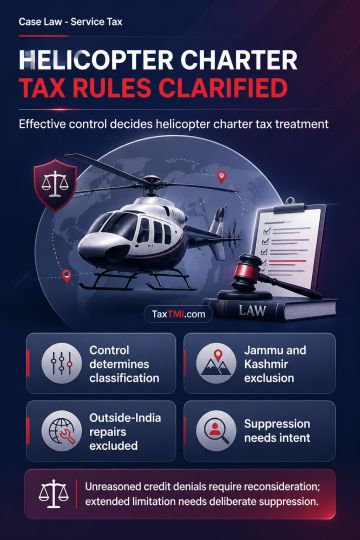
Helicopter charter classification requires effective control analysis, while territorial performance, reasoned credit orders and wilful suppression de...
Specified fund definition expands PAN exemption eligibility for registered alternative investment funds and qualifying International Financial Service...
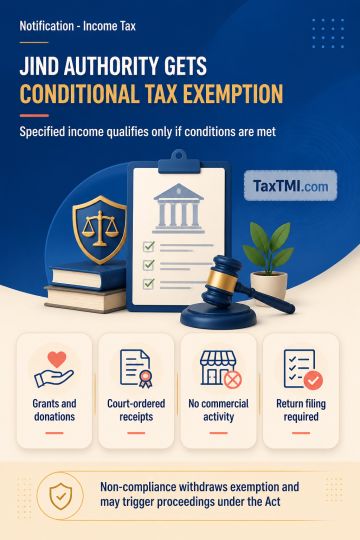
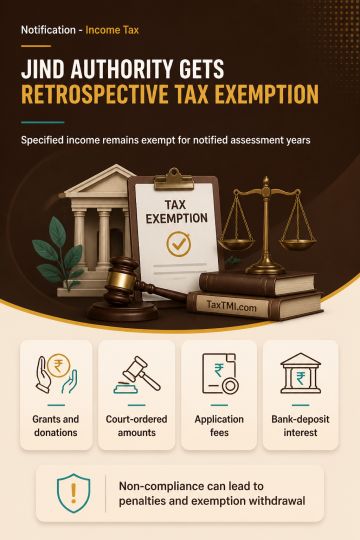
Tax exemption for specified legal-services authority income applies retrospectively, subject to non-commercial activity, unchanged income sources, and...
The HC quashed orders rejecting the petitioner's claim for refund of unutilized Input Tax Credit on supplies made to SEZ units without payment of tax. The Court held that once the respondents admitted the petitioner's entitlement to refund, the Court had jurisdiction to direct its grant despite procedural non-compliance with Circular No. 125/44/2019. The Court emphasized that while procedural requirements are important, they cannot extinguish substantive rights of the assessee under tax laws. Allowing the Department to retain excess tax would constitute unjust enrichment contrary to Article 265 of the Constitution. The Court ruled that procedure must remain subservient to substantive justice, particularly in genuine refund cases where the assessee's rights are established.
The HC quashed orders rejecting the petitioner's claim for refund of unutilized Input Tax Credit on supplies made to SEZ units without payment of tax. The Court held that once the respondents admitted the petitioner's entitlement to refund, the Court had jurisdiction to direct its grant despite procedural non-compliance with Circular No. 125/44/2019. The Court emphasized that while procedural requirements are important, they cannot extinguish substantive rights of the assessee under tax laws. Allowing the Department to retain excess tax would constitute unjust enrichment contrary to Article 265 of the Constitution. The Court ruled that procedure must remain subservient to substantive justice, particularly in genuine refund cases where the assessee's rights are established.
Note: It is a system-generated summary and is for quick reference only.
 TaxTMI
 of 4805










 Join Channel


 TaxTMI