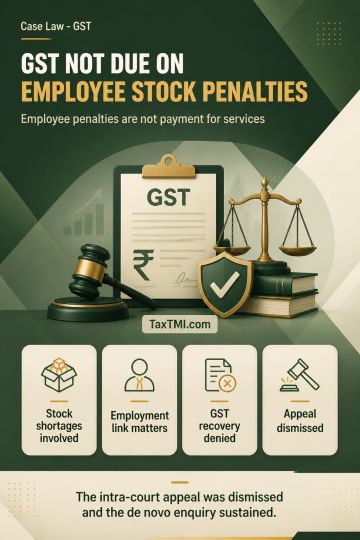
Employee stock-shortage penalties do not constitute consideration for services, preventing GST collection under Schedule II in employment relationship...
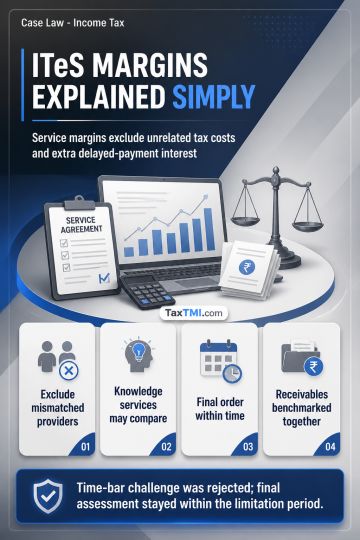
Transfer-pricing treatment of ITeS margins excludes pass-through tax recoveries and separate delayed-receivables interest after working-capital adjust...
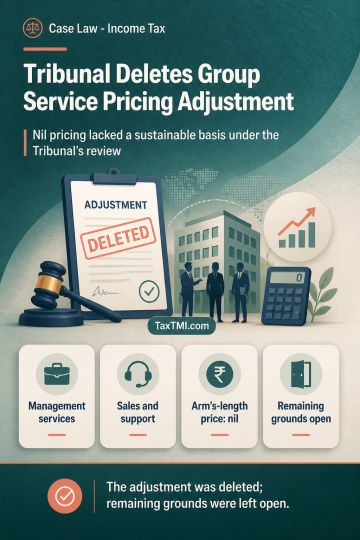
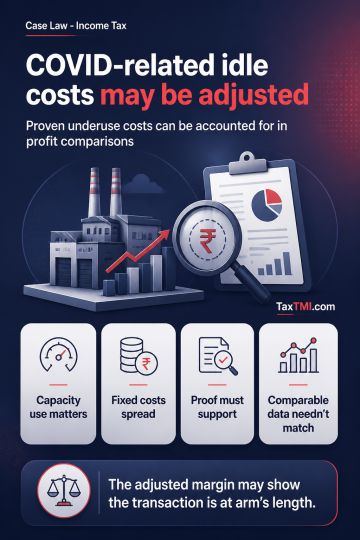
Capacity-utilisation adjustments under TNMM can neutralise substantiated COVID-related idle costs where underutilisation materially affects profitabil...
Page of 4830
Press 'Enter' after typing page number.
181 to 200 of 96587 Results
❮
❯
❯❯
0 / 200
Expand Note
Add to Folder
No Folders have been created
+
Are you sure you want to delete "My most important" ?
CESTAT upheld that Student Almanac and Teacher Planner are properly classifiable under Chapter 48 (Articles of Paper/Paperboard) rather than Chapter 49, as they primarily serve as writing materials with 90% blank space despite containing school-specific information. The Tribunal confirmed denial of exemption for waste and scrap under N/N. 27/2011-CE. However, CESTAT ruled in favor of the assessee regarding limitation period, finding no evidence of intentional duty evasion or fact suppression, thus setting aside demands for the extended period. Penalties under Section 11AC were correctly removed, and the penalty imposed on the Director under Rule 26 was appropriately set aside as there was neither goods confiscation nor wrongful Cenvat credit claims. Appeal dismissed.
CESTAT upheld that Student Almanac and Teacher Planner are properly classifiable under Chapter 48 (Articles of Paper/Paperboard) rather than Chapter 49, as they primarily serve as writing materials with 90% blank space despite containing school-specific information. The Tribunal confirmed denial of exemption for waste and scrap under N/N. 27/2011-CE. However, CESTAT ruled in favor of the assessee regarding limitation period, finding no evidence of intentional duty evasion or fact suppression, thus setting aside demands for the extended period. Penalties under Section 11AC were correctly removed, and the penalty imposed on the Director under Rule 26 was appropriately set aside as there was neither goods confiscation nor wrongful Cenvat credit claims. Appeal dismissed.
Note: It is a system-generated summary and is for quick reference only.
 TaxTMI
  TaxTMI
 of 4830




 Join Channel


