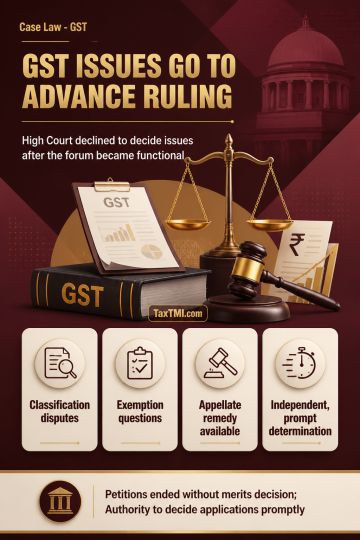
Advance-ruling mechanism governs pending GST classification, exemption and taxability disputes, limiting writ review once the specialised forum functi...
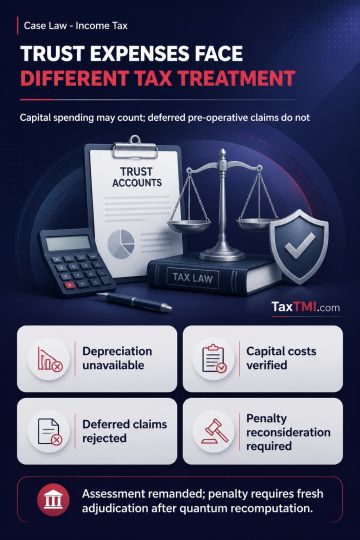
Charitable trust income application permits verified capital expenditure but rejects deferred pre-operative claims and requires reconsideration of con...
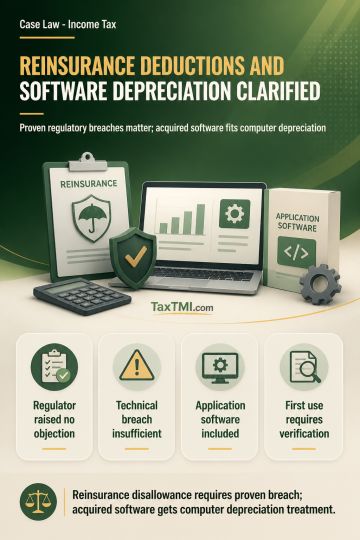
Reinsurance premium deductions require established regulatory breaches, while independently acquired software qualifies within the computer depreciati...
Page of 4796
Press 'Enter' after typing page number.
761 to 780 of 95916 Results
❮
❯
❯❯
0 / 200
Expand Note
Add to Folder
No Folders have been created
+
Are you sure you want to delete "My most important" ?
In this CESTAT decision, the Tribunal allowed the appeal against allegations of clandestine manufacture and removal of MS ingots. The Tribunal found multiple procedural violations by the adjudicating authority, including failure to comply with Section 9D(2) of the Central Excise Act when relying on statements recorded under Section 14, and non-compliance with Section 36B regarding electronic evidence admissibility. The Tribunal emphasized that in cases involving serious financial penalties, Revenue must meet a "clear and convincing evidence" standard, which was not satisfied. The investigation lacked corroborative evidence such as unaccounted raw material procurement, production capacity evaluation, or statements from transporters. Consequently, the demands for duty on alleged clandestine clearances, recovery of CENVAT credit, and associated penalties were found unsustainable.
In this CESTAT decision, the Tribunal allowed the appeal against allegations of clandestine manufacture and removal of MS ingots. The Tribunal found multiple procedural violations by the adjudicating authority, including failure to comply with Section 9D(2) of the Central Excise Act when relying on statements recorded under Section 14, and non-compliance with Section 36B regarding electronic evidence admissibility. The Tribunal emphasized that in cases involving serious financial penalties, Revenue must meet a "clear and convincing evidence" standard, which was not satisfied. The investigation lacked corroborative evidence such as unaccounted raw material procurement, production capacity evaluation, or statements from transporters. Consequently, the demands for duty on alleged clandestine clearances, recovery of CENVAT credit, and associated penalties were found unsustainable.
Note: It is a system-generated summary and is for quick reference only.
 TaxTMI
 of 4796




 Join Channel


 TaxTMI