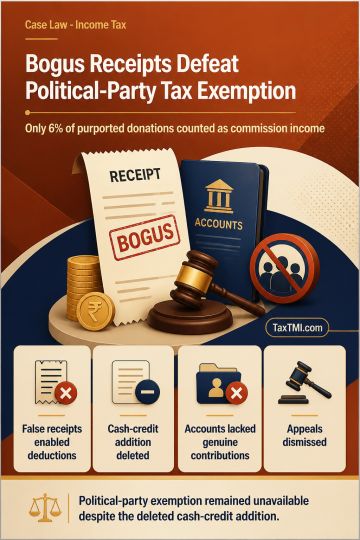
Bogus donation receipts justified commission income assessment and defeated political-party tax exemption for inaccurate accounts and reporting failur...
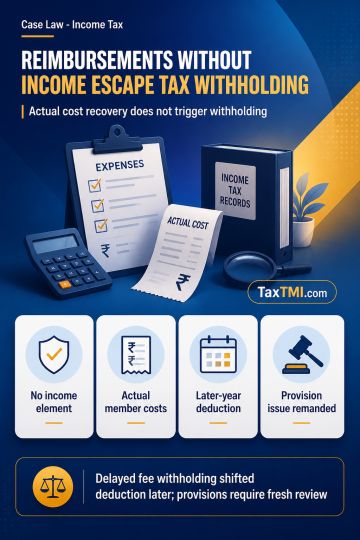
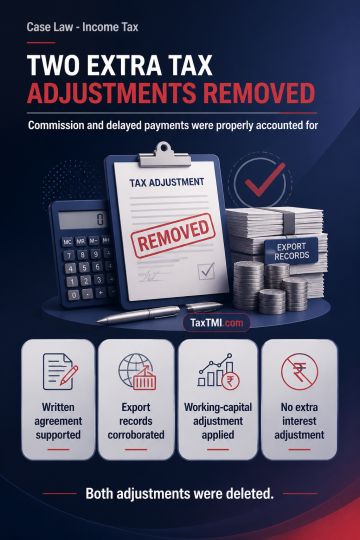
Pure reimbursement without income element escapes tax withholding, while delayed withholding and unsupported provisions face deferred or renewed scrut...
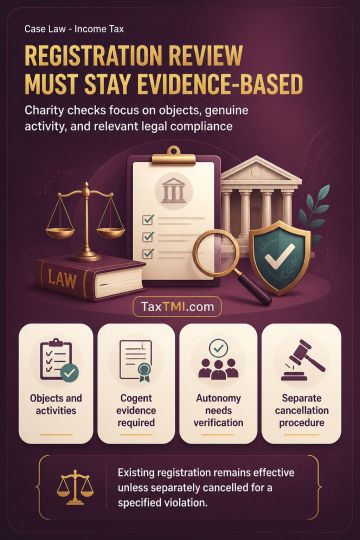
Public benefit requirement defeats charitable registration where residents' association services are reciprocal, member-only facilities governed by mu...
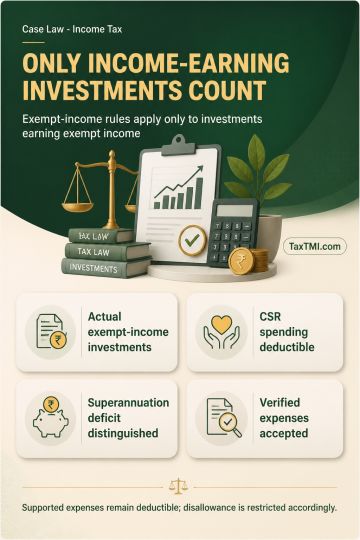
Exempt-income expenditure disallowance is confined to investments that actually generated exempt income, while supported business expenses remain dedu...
In this CESTAT decision, the Tribunal allowed the appeal against allegations of clandestine manufacture and removal of MS ingots. The Tribunal found multiple procedural violations by the adjudicating authority, including failure to comply with Section 9D(2) of the Central Excise Act when relying on statements recorded under Section 14, and non-compliance with Section 36B regarding electronic evidence admissibility. The Tribunal emphasized that in cases involving serious financial penalties, Revenue must meet a "clear and convincing evidence" standard, which was not satisfied. The investigation lacked corroborative evidence such as unaccounted raw material procurement, production capacity evaluation, or statements from transporters. Consequently, the demands for duty on alleged clandestine clearances, recovery of CENVAT credit, and associated penalties were found unsustainable.
In this CESTAT decision, the Tribunal allowed the appeal against allegations of clandestine manufacture and removal of MS ingots. The Tribunal found multiple procedural violations by the adjudicating authority, including failure to comply with Section 9D(2) of the Central Excise Act when relying on statements recorded under Section 14, and non-compliance with Section 36B regarding electronic evidence admissibility. The Tribunal emphasized that in cases involving serious financial penalties, Revenue must meet a "clear and convincing evidence" standard, which was not satisfied. The investigation lacked corroborative evidence such as unaccounted raw material procurement, production capacity evaluation, or statements from transporters. Consequently, the demands for duty on alleged clandestine clearances, recovery of CENVAT credit, and associated penalties were found unsustainable.
Note: It is a system-generated summary and is for quick reference only.
 TaxTMI
 of 4792




 Join Channel


 TaxTMI