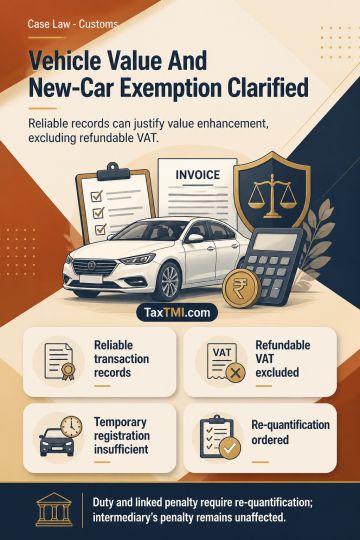
Transaction value rejection requires reliable corroboration; refundable VAT is excluded and temporary registration does not defeat new-vehicle exempti...
Appellate jurisdiction remains available where a wrist-worn gold ornament cannot conclusively be characterised as imported baggage at the preliminary ...
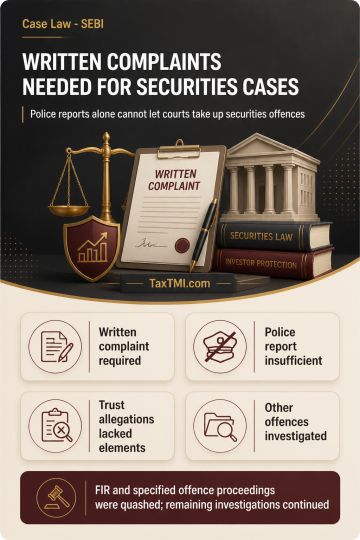
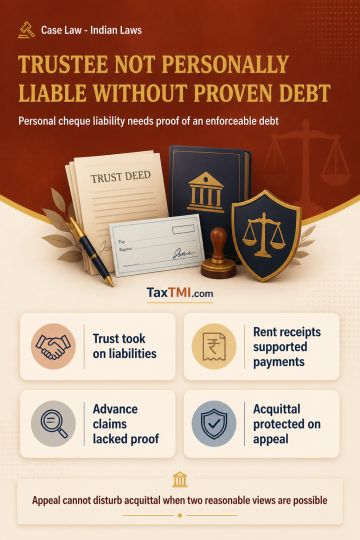
Written complaint requirement bars cognizance on police reports for securities offences, while unsupported breach of trust and cheating allegations fa...
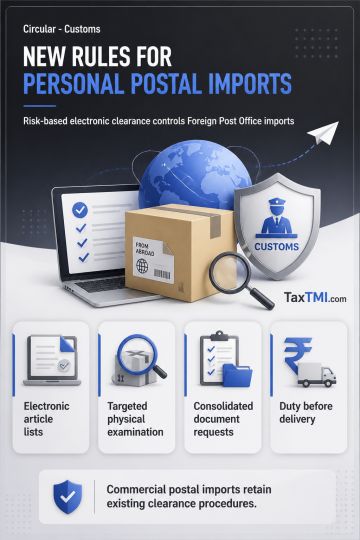
Risk-based postal import clearance standardises electronic assessment, document requests, duty realisation and delivery controls at Foreign Post Offic...
Customs Cargo Service Provider appointment extends custodianship to additional terminal land, subject to cargo-control, security and licence condition...
In this CESTAT decision, the Tribunal allowed the appeal against allegations of clandestine manufacture and removal of MS ingots. The Tribunal found multiple procedural violations by the adjudicating authority, including failure to comply with Section 9D(2) of the Central Excise Act when relying on statements recorded under Section 14, and non-compliance with Section 36B regarding electronic evidence admissibility. The Tribunal emphasized that in cases involving serious financial penalties, Revenue must meet a "clear and convincing evidence" standard, which was not satisfied. The investigation lacked corroborative evidence such as unaccounted raw material procurement, production capacity evaluation, or statements from transporters. Consequently, the demands for duty on alleged clandestine clearances, recovery of CENVAT credit, and associated penalties were found unsustainable.
In this CESTAT decision, the Tribunal allowed the appeal against allegations of clandestine manufacture and removal of MS ingots. The Tribunal found multiple procedural violations by the adjudicating authority, including failure to comply with Section 9D(2) of the Central Excise Act when relying on statements recorded under Section 14, and non-compliance with Section 36B regarding electronic evidence admissibility. The Tribunal emphasized that in cases involving serious financial penalties, Revenue must meet a "clear and convincing evidence" standard, which was not satisfied. The investigation lacked corroborative evidence such as unaccounted raw material procurement, production capacity evaluation, or statements from transporters. Consequently, the demands for duty on alleged clandestine clearances, recovery of CENVAT credit, and associated penalties were found unsustainable.
Note: It is a system-generated summary and is for quick reference only.
 TaxTMI
 of 4784






 Join Channel


 TaxTMI