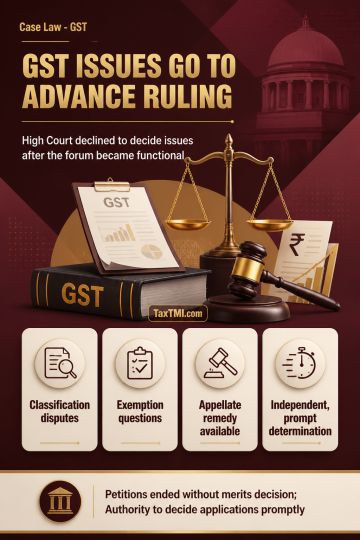
Advance-ruling mechanism governs pending GST classification, exemption and taxability disputes, limiting writ review once the specialised forum functi...
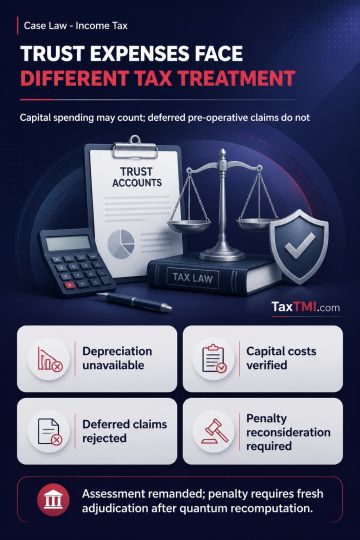
Charitable trust income application permits verified capital expenditure but rejects deferred pre-operative claims and requires reconsideration of con...
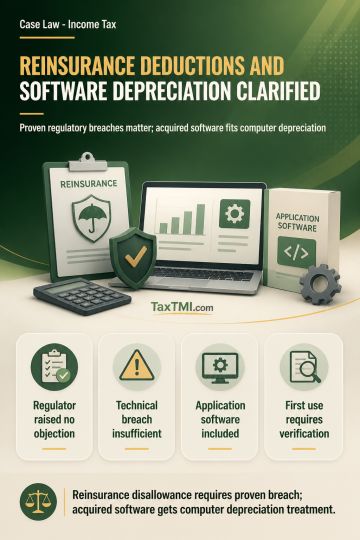
Reinsurance premium deductions require established regulatory breaches, while independently acquired software qualifies within the computer depreciati...
Page of 4796
Press 'Enter' after typing page number.
761 to 780 of 95918 Results
❮
❯
❯❯
0 / 200
Expand Note
Add to Folder
No Folders have been created
+
Are you sure you want to delete "My most important" ?
The HC ruled that Section 25A of the KVAT Act, despite its non-obstante clause, merely provides an additional ground for reassessment and does not override the limitation period under Section 25(1). When the Assessing Officer receives a CAG objection, they must determine its lawfulness after giving the dealer an opportunity to be heard. If satisfied, reassessment must still follow the statutory procedure under Section 25(1), including adherence to limitation periods. The Revenue cannot circumvent time-barred assessments by initiating reassessment based on subsequent CAG reports. The court dismissed the State's O.T. Revisions and Writ Appeal, affirming that procedural due process in taxation cannot be inferred but must be explicitly provided in statute.
The HC ruled that Section 25A of the KVAT Act, despite its non-obstante clause, merely provides an additional ground for reassessment and does not override the limitation period under Section 25(1). When the Assessing Officer receives a CAG objection, they must determine its lawfulness after giving the dealer an opportunity to be heard. If satisfied, reassessment must still follow the statutory procedure under Section 25(1), including adherence to limitation periods. The Revenue cannot circumvent time-barred assessments by initiating reassessment based on subsequent CAG reports. The court dismissed the State's O.T. Revisions and Writ Appeal, affirming that procedural due process in taxation cannot be inferred but must be explicitly provided in statute.
Note: It is a system-generated summary and is for quick reference only.
 TaxTMI
 of 4796










 Join Channel


 TaxTMI