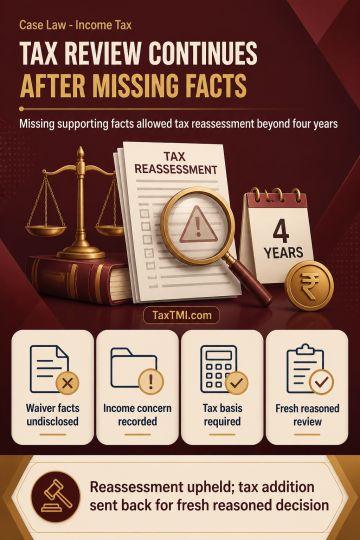
Contractual tolerance requires consideration; breach recoveries, qualifying public infrastructure services and road works escape service tax liability...
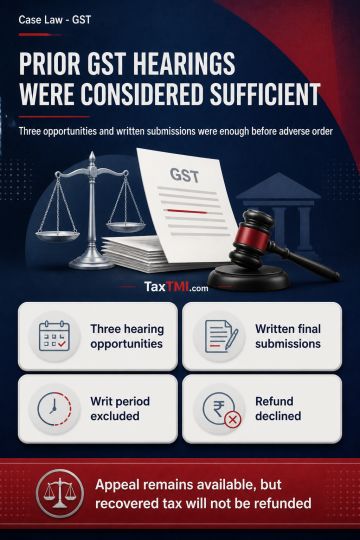
Personal hearing requirements in GST adjudication were satisfied by prior opportunities and written submissions; appellate limitation received writ-pe...
The HC ruled that Section 25A of the KVAT Act, despite its non-obstante clause, merely provides an additional ground for reassessment and does not override the limitation period under Section 25(1). When the Assessing Officer receives a CAG objection, they must determine its lawfulness after giving the dealer an opportunity to be heard. If satisfied, reassessment must still follow the statutory procedure under Section 25(1), including adherence to limitation periods. The Revenue cannot circumvent time-barred assessments by initiating reassessment based on subsequent CAG reports. The court dismissed the State's O.T. Revisions and Writ Appeal, affirming that procedural due process in taxation cannot be inferred but must be explicitly provided in statute.
The HC ruled that Section 25A of the KVAT Act, despite its non-obstante clause, merely provides an additional ground for reassessment and does not override the limitation period under Section 25(1). When the Assessing Officer receives a CAG objection, they must determine its lawfulness after giving the dealer an opportunity to be heard. If satisfied, reassessment must still follow the statutory procedure under Section 25(1), including adherence to limitation periods. The Revenue cannot circumvent time-barred assessments by initiating reassessment based on subsequent CAG reports. The court dismissed the State's O.T. Revisions and Writ Appeal, affirming that procedural due process in taxation cannot be inferred but must be explicitly provided in statute.
Note: It is a system-generated summary and is for quick reference only.
 TaxTMI
 of 4792








 Join Channel


 TaxTMI