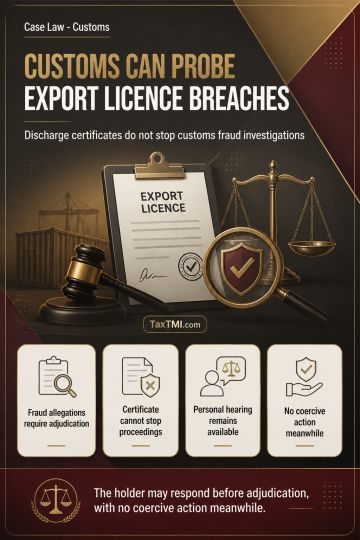
Customs jurisdiction over EPCG condition breaches survives export-obligation discharge certificates, requiring alleged fraud and misdeclaration to be ...
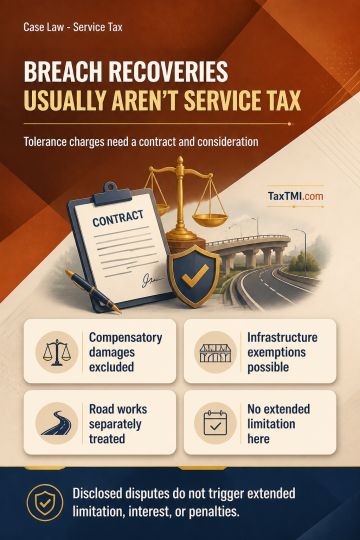
Contractual tolerance requires consideration; breach recoveries, qualifying public infrastructure services and road works escape service tax liability...
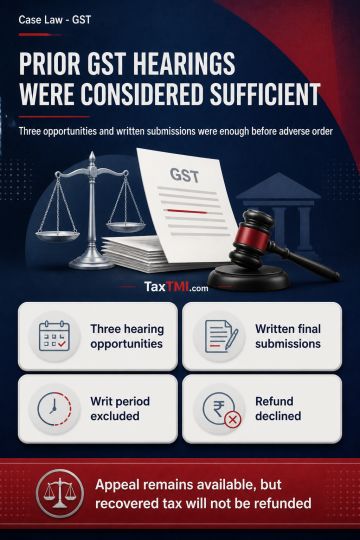
Personal hearing requirements in GST adjudication were satisfied by prior opportunities and written submissions; appellate limitation received writ-pe...
The HC condoned a 292-day delay in filing an appeal in a dishonored cheque case, despite acknowledging that government organizations should strictly adhere to limitation periods without automatic relaxation. The Court found the appellant provided a plausible explanation for the delay, and noted the original dismissal was for non-prosecution rather than on merits. Applying a pragmatic approach to advance justice, the HC determined sufficient cause existed to condone the delay, reasoning that public interest would be severely affected if government appeals were lost due to procedural defaults. The appellant was granted leave to file the memorandum of appeal within the statutory period.
The HC condoned a 292-day delay in filing an appeal in a dishonored cheque case, despite acknowledging that government organizations should strictly adhere to limitation periods without automatic relaxation. The Court found the appellant provided a plausible explanation for the delay, and noted the original dismissal was for non-prosecution rather than on merits. Applying a pragmatic approach to advance justice, the HC determined sufficient cause existed to condone the delay, reasoning that public interest would be severely affected if government appeals were lost due to procedural defaults. The appellant was granted leave to file the memorandum of appeal within the statutory period.
Note: It is a system-generated summary and is for quick reference only.
 TaxTMI
 of 4790







 Join Channel


 TaxTMI